Best Sleeping Position for Neck Pain: Pillow Tips and Treatment Options in Shelton, CT
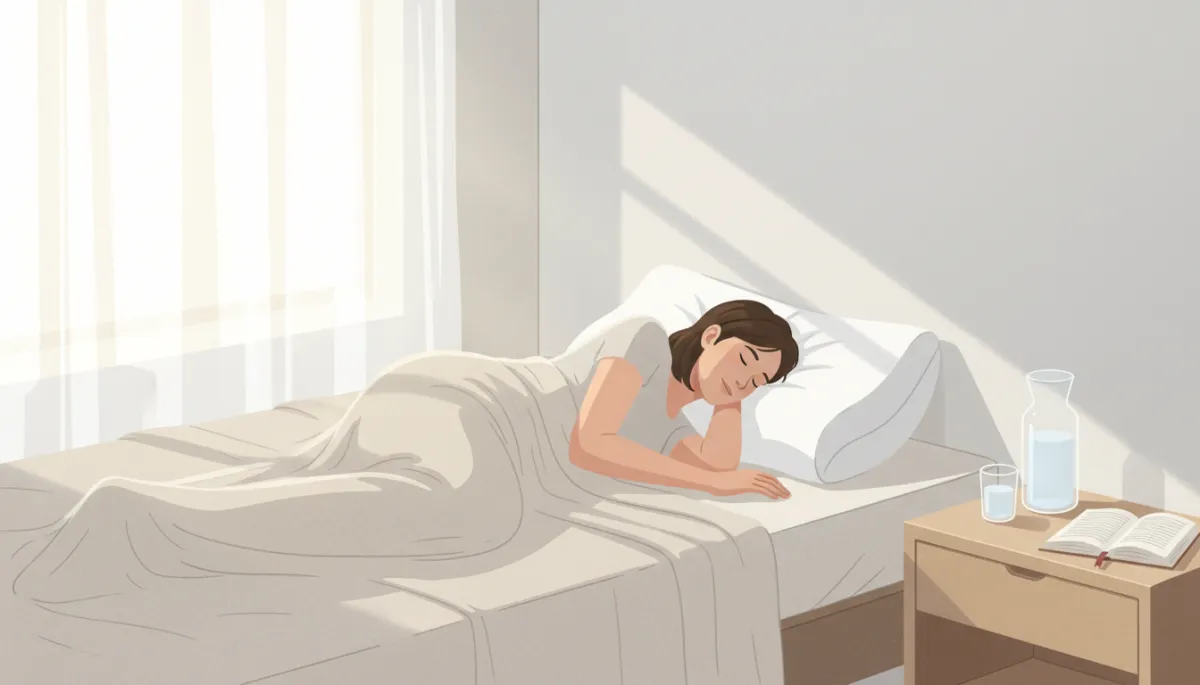
Neck pain can ruin your sleep.
And poor sleep can make neck pain worse.
That is the ugly little cycle many people get stuck in.
Sometimes neck pain comes from sleeping awkwardly, using the wrong pillow, lying on your stomach, or staying in one position too long.
Other times, waking up with neck pain may be related to arthritis, disc irritation, muscle tension, poor posture, old whiplash injuries, or joint stiffness in the cervical spine.
At Connecticut Disc and Laser Therapy Centers in Shelton, CT, we evaluate patients dealing with neck pain, headaches, stiffness, upper back tightness, nerve irritation, and sleep-related neck pain that has not improved with new pillows, stretching, massage, medications, physical therapy, or simply “waiting it out.”
The good news?
Not every case of neck pain requires injections, surgery, or long-term medication.
For many patients, advanced non-surgical treatment may help reduce inflammation, improve mobility, calm irritated tissues, and support better function.
In this article, we’ll explain:
why neck pain can disrupt sleep
best sleeping positions for neck pain
how to choose a pillow
why stomach sleeping can make neck pain worse
warning signs you should not ignore
non-surgical neck pain treatment options in Shelton, CT
1. Why Neck Pain Can Disrupt Sleep
Neck pain and poor sleep often feed into each other.
When your neck hurts, it can be hard to fall asleep, stay asleep, or find a comfortable position.
Then poor sleep can make pain feel worse the next day.
That can lead to:
morning neck stiffness
headaches
upper back tightness
shoulder tension
fatigue
difficulty concentrating
irritability
more muscle guarding
less tolerance for daily activity
Some patients say:
“I wake up with neck pain before the day even starts.”
That is frustrating, and it is also a clue.
If your neck hurts every morning, your pillow or sleep position may be part of the problem.
But if changing pillows does not help, there may be an underlying neck issue that needs to be evaluated.
If your main symptom is neck pain, you can learn more about our approach on the Neck Pain Treatment in Shelton, CT page.
📌 Key Takeaway: Neck pain and poor sleep can create a cycle. If you wake up stiff or sore most mornings, do not ignore it.
2. What Is the Best Sleeping Position for Neck Pain?
For most people with neck pain, the best sleeping position is one that keeps the neck in a neutral position.
That means your head should not be pushed too far forward, tilted too far backward, or angled sharply to one side.
Sleeping on Your Back
Back sleeping may work well if your pillow supports the natural curve of your neck without forcing your head forward.
A good back-sleeping position should keep:
your head level
your neck supported
your chin from being pushed toward your chest
your shoulders relaxed
your spine in a neutral position
If your pillow is too thick, your head may be pushed forward all night.
That can irritate the neck and contribute to morning stiffness or headaches.
Sleeping on Your Side
Side sleeping can also work well when the pillow height fills the space between your shoulder and head.
A good side-sleeping position should keep:
your head level with your spine
your neck from bending up or down
your shoulders from collapsing forward
your body supported
your spine relatively straight
If your pillow is too low, your head drops down.
If your pillow is too high, your head tilts up.
Either way, the neck can get irritated.
📌 Key Takeaway: The best sleep position for neck pain is usually back or side sleeping with the neck kept neutral.
3. Why Stomach Sleeping Is Rough on the Neck
Stomach sleeping is usually the worst position for neck pain.
Why?
Because your head has to turn to one side so you can breathe.
That means your neck may stay rotated for hours.
Over time, stomach sleeping may irritate:
neck joints
muscles
ligaments
discs
nerves
upper back tissues
It may also contribute to:
morning neck stiffness
headaches
shoulder pain
upper back tightness
limited range of motion
flare-ups after sleeping
If you are a stomach sleeper, switching positions can be difficult.
But it is often worth trying.
A body pillow may help prevent you from rolling fully onto your stomach.
Some patients also do better by gradually transitioning to side sleeping.
If you absolutely cannot stop stomach sleeping, a very thin pillow — or no pillow — may reduce how much the neck is forced upward.
📌 Key Takeaway: Stomach sleeping keeps the neck rotated for long periods and can make neck pain or headaches worse.
4. How to Choose a Pillow for Neck Pain
There is no one perfect pillow for everyone.
Annoying, but true.
The right pillow depends on your body size, shoulder width, mattress firmness, sleep position, and the way your neck responds.
A good pillow should:
support the neck
keep the head level
avoid pushing the chin toward the chest
avoid letting the head drop backward
work with your mattress
feel comfortable enough to actually sleep
The wrong pillow may contribute to:
neck stiffness
headaches
shoulder tension
upper back pain
pain at the base of the skull
waking up sore
tossing and turning
A simple test:
Have someone take a picture of you lying in your normal sleep position.
If your head is tilted sharply up, down, forward, or sideways, your pillow height may be off.
5. Pillow Materials: What Should You Use?
Pillow material matters, but support matters more.
Here are common options:
Memory Foam
Memory foam can mold to the head and neck.
It may be helpful for some people because it offers consistent support.
The downside is that some memory foam pillows can trap heat or feel too firm.
Latex Foam
Latex foam can also provide support and contouring.
It may sleep cooler than some memory foam and often holds its shape well.
Some patients like latex because it feels supportive without sinking too much.
Feather or Down
Feather and down pillows can feel soft and moldable.
The problem is that they may flatten or shift during the night.
That can leave the neck unsupported.
Some patients also have allergy or sensitivity issues with feather pillows.
Buckwheat Pillows
Buckwheat pillows can mold to the head and neck and tend to stay cooler.
The downside is that they can feel firm or noisy when moving.
📌 Key Takeaway: Do not choose a pillow just because it is soft. Choose one that keeps your neck supported and neutral.
6. Mattress Firmness Matters Too
Your pillow does not work alone.
Your mattress affects how your neck is positioned.
A softer mattress may let your shoulder sink more, which can change the pillow height you need.
A firmer mattress may keep your shoulder higher, which may require a different pillow height.
For side sleepers:
a broader shoulder usually needs more pillow height
a softer mattress may require less pillow height
a firmer mattress may require more pillow height
For back sleepers:
too much pillow height can push the head forward
too little support can let the neck collapse backward
a small cervical support may help some patients
The goal is not just comfort in the store.
The goal is waking up with less pain.
7. Can the Wrong Pillow Cause Headaches?
Yes.
The wrong pillow can contribute to headaches, especially headaches that start at the base of the skull or back of the head.
This can happen when the upper neck is held in a strained position for hours.
Neck-related headaches may feel worse:
first thing in the morning
after sleeping in one position
after using a pillow that is too high
after using a pillow that is too flat
with neck stiffness
with pain at the base of the skull
with shoulder tightness
If your headaches start at the back of the head, you may also want to read more aboutNeck Pain and Headaches at the Back of the Head, if that page is active.
📌 Key Takeaway: Morning headaches can sometimes come from poor neck positioning during sleep.
8. Warning Signs You Should Not Ignore
Some neck symptoms should be evaluated sooner rather than later.
You should consider a professional evaluation if you have:
neck pain that keeps returning
morning neck stiffness that does not improve
headaches at the back of the head
pain that affects sleep
pain traveling into the shoulder or arm
numbness or tingling
weakness in the arm or hand
dizziness
pain after a car accident or fall
pain that has lasted more than a few weeks
neck pain that has not improved with a new pillow
pain that worsens with computer work or driving
These symptoms may suggest joint irritation, muscle guarding, disc involvement, nerve irritation, postural strain, or another condition that should be evaluated.
⚠️ Important: Seek urgent medical care if you experience sudden severe headache, confusion, loss of consciousness, chest pain, shortness of breath, facial drooping, slurred speech, severe weakness, vision loss, fever with neck stiffness, or symptoms that feel like a medical emergency.
9. Non-Surgical Neck Pain Treatment Options in Shelton, CT
At Connecticut Disc and Laser Therapy Centers, we focus on advanced non-surgical treatment options for neck pain, headaches, stiffness, upper back tightness, nerve irritation, soft tissue pain, and musculoskeletal conditions.
Treatment depends on what is actually causing the symptoms.
The goal is not to use the same treatment plan for every neck pain patient.
The goal is to identify what is driving the pain and build the plan around that.
Chiropractic Care for Neck Pain
Chiropractic care may help improve spinal mobility, reduce stiffness, and address joint dysfunction that may contribute to neck pain and headaches.
For sleep-related neck pain, chiropractic care may focus on:
neck mobility
upper back mobility
posture-related stress
muscle guarding
reduced range of motion
headaches related to neck dysfunction
shoulder and upper back tension
Treatment should always be based on the patient’s symptoms, examination findings, and tolerance.
The goal is to restore better motion and reduce irritation without forcing the body beyond what it can handle.
MLS Laser Therapy
MLS Laser Therapy uses specific wavelengths of light designed to penetrate deeper tissues and support healing at the cellular level.
For neck pain and headache-related muscle tension, MLS Laser Therapy may help:
reduce inflammation
decrease pain
improve circulation
calm irritated soft tissues
support tissue recovery
reduce stiffness
improve mobility
MLS Laser Therapy is non-invasive, comfortable, and requires no downtime.
It may be used when muscles, ligaments, tendons, or other soft tissues remain irritated.
emField Pro High Energy Inductive Therapy
emField Pro High Energy Inductive Therapy, also known as HEIT, uses high-intensity electromagnetic energy to stimulate deeper tissues.
For the right neck pain patient, HEIT may help support:
deep tissue stimulation
muscle activation
circulation
mobility
pain reduction
soft tissue recovery
reduction of muscle spasm
This can be especially helpful when deeper muscle tightness, soft tissue irritation, or chronic guarding is part of the problem.
HEIT is not the same as simple surface stimulation.
It is designed to reach deeper tissues and may be used as part of a broader non-surgical treatment plan.
Spinal Decompression Therapy
For certain patients with disc-related neck pain or nerve irritation,Spinal Decompression Therapy may also be considered.
This may be appropriate when symptoms involve:
disc-related neck pain
bulging discs
herniated discs
nerve irritation
pain traveling into the shoulder or arm
numbness or tingling
degenerative disc problems
Not every neck pain patient needs spinal decompression.
But when disc pressure or nerve irritation is part of the problem, it may be an important non-surgical option.
Sleep Position and Home Care Recommendations
Depending on the patient, treatment may also include:
pillow recommendations
sleep position guidance
desk setup advice
driving-position recommendations
gentle mobility work
home stretching guidance
activity modification
posture recommendations
strengthening exercises
The goal is to reduce the strain on the neck during both the day and night.
Because if your neck is irritated all day and poorly supported all night, it does not get much of a break.
10. When Should You Get Checked?
You should consider scheduling an evaluation if your neck pain:
lasts more than a few weeks
keeps returning
is getting worse
affects sleep
causes headaches
starts at the base of the skull
limits neck motion
makes driving uncomfortable
worsens with computer work
travels into the shoulder or arm
causes numbness or tingling
has not improved with pillow changes
is starting to affect your quality of life
The earlier neck pain is evaluated, the more conservative options patients often have.
Waiting until symptoms become severe or chronic can make treatment more complicated.
11. Why Patients in Shelton Choose Connecticut Disc and Laser Therapy Centers
Patients often come to our office after trying:
new pillows
new mattresses
sleep position changes
heat
ice
stretching
massage
medications
physical therapy
ergonomic changes
generic exercises
“wait and see”
Many are frustrated because they still have neck pain, headaches, stiffness, upper back tightness, or poor sleep.
At Connecticut Disc and Laser Therapy Centers in Shelton, CT, we focus on advanced non-surgical care for neck pain, headaches, back pain, disc conditions, nerve irritation, soft tissue injuries, joint pain, and musculoskeletal conditions.
Our goal is to help patients reduce pain, improve mobility, and explore conservative treatment options whenever possible.
You can learn more about Dr. James J. Dalfino and his clinical background on our website.
Related Articles and Pages
For more information, these pages may be helpful:
Neck Pain Treatment in Shelton, CT
Neck Pain and Headaches at the Back of the Head
Text Neck and Tablet Neck Pain
Chiropractic Care in Shelton, CT
MLS Laser Therapy
emField Pro High Energy Inductive Therapy
Spinal Decompression Therapy
Back Pain Treatment in Shelton, CT
Meet Dr. James J. Dalfino
Contact Connecticut Disc and Laser Therapy Centers
Bottom Line
Neck pain and poor sleep often feed into each other.
A better pillow or sleep position may help, but if neck pain keeps returning, causes headaches, affects sleep, or travels into the shoulder or arm, the problem should be evaluated.
The key is finding out what is actually causing the pain.
At Connecticut Disc and Laser Therapy Centers in Shelton, CT, we help patients explore advanced non-surgical options designed to reduce pain, improve mobility, calm irritated tissues, and support better function whenever possible.
New Patient Special — $99
Comprehensive Consultation, Examination, Report of Findings, and First Treatment Included.
Connecticut Disc and Laser Therapy Centers
Dr. James J. Dalfino
2 Trap Falls Road | Suite 208 | Shelton, CT 06484
Office: 203-922-9277
Website: Connecticut Disc and Laser Therapy Centers


