
Predicting Back Pain Outcomes: Is It Possible?
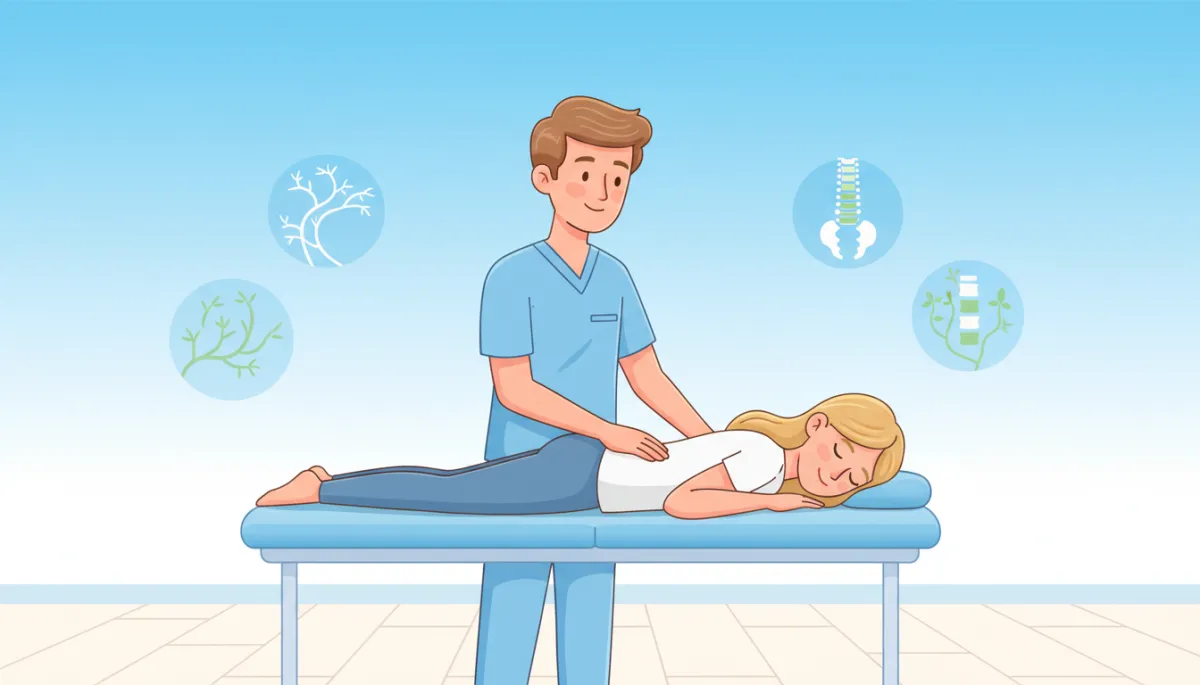
Can the Outcome of Back Pain Be Predicted with Non-Surgical Care?
Low back pain can make simple daily activities feel exhausting. Walking through the grocery store, sitting at your desk, standing to cook dinner, or even getting comfortable in bed may all become difficult when your back hurts.
Many patients tell us that back pain affects their ability to drive, work, lift groceries or children, exercise, and enjoy time with family and friends. It is common to worry about how long the pain will last and whether it will keep coming back.
At Connecticut Disc and Laser Therapy Centers in Shelton, CT, we evaluate patients dealing with low back pain, radiating leg pain, sciatica, disc-related pain, muscle tightness, and other spine-related conditions that can interfere with daily life and mobility.
The good news? Low back pain does not automatically mean you need surgery, injections, or long-term medication. For the right patient, advanced non-surgical treatment options may help reduce pain, improve mobility, calm irritated tissues, and support better function as part of a comprehensive care plan.
In this article, we’ll explain:
Why some back pain responds better to treatment than others
What “directional preference” and “centralization” mean for your back pain
How these findings may help predict your response to care
How advanced non-surgical treatments at our Shelton office may help support recovery
1. Understanding Low Back Pain and Radiating Leg Symptoms
Low back pain (LBP) can range from a dull ache to sharp, shooting pain. In some cases, the pain stays in the lower back. In other cases, it may travel into the hips, buttocks, or down one or both legs, sometimes with numbness, tingling, or weakness. This is often called sciatica or radiating leg pain.
These symptoms may be related to irritated discs, nerves, joints, or soft tissues around the spine. The way your pain behaves when you move can offer important clues about what is happening and how likely it is to respond to conservative, non-surgical treatment.
2. Can We Predict How Back Pain Will Respond to Treatment?
While there is no “crystal ball,” research suggests that certain exam findings may help estimate how a patient’s back pain could respond to care. A meta-analysis of 43 studies published since 2012 found that two key findings—called centralization and directional preference—may be present in 60–70% of low back pain cases and may provide helpful prognostic information.
These findings come from careful movement testing during an examination. By observing how your symptoms change as you bend, twist, or extend your spine, your provider can gather information about which positions may help calm irritated tissues and which positions may aggravate them.
3. What Is Directional Preference?
Directional preference means that there is a specific direction of movement that tends to make your symptoms feel better. For example, some patients feel better when they gently bend backward, while others feel better when they bend forward or lean to one side.
During an exam, your provider may ask you to slowly bend forward, bend backward, lean side to side, or rotate your torso. They will carefully note which directions reduce pain, which directions increase pain, and which directions cause the pain to move or change in intensity.
💡 Helpful to know: Finding a directional preference does not mean you should repeatedly move into that position on your own without guidance. It is one piece of information your provider may use to design a safe, individualized treatment plan.
4. What Is Centralization of Pain?
Centralization occurs when pain that is traveling down the leg begins to retreat back toward the spine. In other words, the pain becomes more localized to the lower back and less intense or less widespread in the leg, calf, or foot as you move in certain directions.
For example, if you start with low back pain plus numbness and tingling running down to your foot, and specific guided movements reduce the leg symptoms so they are only felt in the thigh or buttock—or disappear entirely—this is considered centralization. Research suggests that centralization is generally a favorable sign in many back and leg pain cases.
5. An Example: Using Movement Testing to Guide Care
Imagine a patient with low back pain that radiates down the leg, with numbness and tingling into the foot. During the exam, the provider asks the patient to gently bend forward, bend backward, lean to each side, and rotate the torso while monitoring how the symptoms respond.
If bending backward reduces the leg pain and the numbness in the foot begins to disappear, this suggests that backward bending may be the directional preference. If the leg and foot symptoms centralize—meaning they retreat back toward the lower back—that is often considered a positive sign that movement-based and non-surgical care may be helpful for that patient.
📌 Key point: When all positions or directions increase leg pain, it may indicate a more challenging case. This does not rule out non-surgical care, but it underscores the importance of a thorough evaluation and a carefully monitored treatment plan.
6. Why Centralization and Directional Preference Matter for Prognosis
When centralization occurs and a clear directional preference is found, it is generally considered a favorable prognostic sign. It suggests that the irritated tissues may respond to specific movements and positioning, and that a targeted, non-surgical treatment plan may help support improvement over time for the right patient.
On the other hand, if every movement makes the leg pain worse, or if symptoms spread farther down the leg, this may indicate a more complex situation. Your provider may still recommend conservative care, but they may also suggest additional testing or imaging when appropriate to better understand what is happening.
7. How This Helps Set Realistic Goals and Expectations
One of the most important parts of back pain care is setting realistic expectations. Over-promising or under-reassuring patients is not helpful. By using centralization and directional preference findings, your provider can offer a more individualized discussion about what to expect in the short and long term.
This information can help you plan work, family activities, and exercise in a way that respects your current condition while you move through treatment. It also helps guide home exercises and posture strategies that may support your in-office care.
8. Advanced Non-Surgical Options: Spinal Decompression Therapy
For some patients with disc-related low back pain or radiating leg symptoms, non-surgical spinal decompression may be considered as part of a treatment plan. This technology gently and precisely stretches the spine in a controlled way, with the goal of reducing pressure on discs and nerves when appropriate.
At our Shelton office, Spinal Decompression Therapy may help support patients who show certain exam and imaging findings, including those with centralization and a clear directional preference. Individual results vary, and a proper evaluation is necessary to determine whether this approach is appropriate for your specific condition.
9. MLS Laser Therapy and emField Pro for Irritated Tissues
In addition to movement-based strategies, we may incorporate advanced technologies designed to support tissue healing and comfort. MLS Laser Therapy uses specific wavelengths of light to help calm irritated tissues, reduce stiffness, and support local circulation in the treated area when appropriate.
emField Pro High Energy Inductive Therapy is another non-invasive option that uses high-energy electromagnetic fields to stimulate targeted tissues. For the right patient, this may help support muscle relaxation, reduce tightness, and complement other non-surgical treatments aimed at improving back and leg symptoms.
⚠️ Important: Not every patient is a candidate for every technology. Your provider will review your history, exam findings, and any imaging to determine which options, if any, may be appropriate for you.
10. Chiropractic and Movement-Based Care in Shelton, CT
When directional preference and centralization are present, chiropractic and movement-based care can often be tailored around those findings. For example, if backward bending reduces leg pain and centralizes symptoms, your provider may emphasize specific extension-based exercises and positions as part of your plan, along with other supportive therapies when appropriate.
At our clinic, Chiropractic Care in Shelton, CT may include gentle spinal adjustments, targeted mobilization, and customized exercises designed to help support spinal alignment, improve mobility, and reduce mechanical stress on irritated tissues. Individual care plans are based on each patient’s unique findings and goals.
11. Back Pain, Sciatica, and Related Conditions We Commonly See
Many patients come to us with long-standing back pain that has begun to affect their legs, sleep, and daily function. Others have new or recurring episodes that seem to flare up with sitting, lifting, or certain activities. Some have been told they have disc herniations, degenerative disc disease, spinal stenosis, or sciatica.
Our team offers Back Pain Treatment in Shelton, CT and Sciatica Treatment in Shelton, CT using a range of non-surgical options. Centralization and directional preference are part of the evaluation tools we use to help guide which approaches may be most appropriate for each individual.
12. Patient Education: Building Confidence and Compliance with Care
Understanding why your provider recommends certain movements, stretches, or positions can make it easier to stay consistent with your treatment plan. When you see how your pain centralizes or improves in certain directions, it often becomes clearer why specific exercises and postures are emphasized.
Patient education is a key part of care at our office. We aim to explain findings in straightforward, patient-friendly language so you know what to expect, what you can do at home, and how your plan may evolve over time. This often improves confidence for both the patient and the provider and may help support better long-term outcomes for the right patient.
13. Why Patients in Shelton Choose Connecticut Disc and Laser Therapy Centers
Many patients visit our office after trying rest, ice, heat, stretching, medication, massage, physical therapy, injections, generic exercises, or a “wait and see” approach. They are often looking for a more targeted, non-surgical strategy that takes their specific exam findings and daily goals into account.
At Connecticut Disc and Laser Therapy Centers in Shelton, CT, we focus on advanced non-surgical care for chronic pain, spine pain, joint pain, nerve irritation, muscle tightness, soft tissue irritation, arthritis-related stiffness, and other musculoskeletal conditions. Our goal is to help patients reduce pain, improve mobility, and explore conservative treatment options whenever possible.
Care is directed by Dr. James J. Dalfino, who integrates detailed movement assessment with advanced technologies such as spinal decompression, MLS laser, and emField Pro when appropriate. Each treatment plan is individualized, and no single approach is right for everyone.
14. Related Articles and Pages
Bottom Line
Low back pain and radiating leg symptoms can be frustrating, especially when they interfere with walking, sitting, working, and enjoying time with family. While no test can predict outcomes with complete certainty, findings like directional preference and centralization may help your provider estimate how your back pain could respond to non-surgical care and guide a more targeted treatment plan.
At Connecticut Disc and Laser Therapy Centers in Shelton, CT, we combine careful movement assessment with advanced non-surgical options such as spinal decompression, MLS laser, emField Pro, and chiropractic or movement-based care when appropriate. For the right patient, these approaches may help reduce pain, improve mobility, and support better function over time as part of a comprehensive plan. Individual results vary, and a proper evaluation is always necessary.
New Patient Special — $99
Comprehensive Consultation, Examination, Report of Findings, and First Treatment Included.
Connecticut Disc and Laser Therapy Centers
Dr. James J. Dalfino
2 Trap Falls Road | Suite 208 | Shelton, CT 06484
Office: 203-922-9277
Website: Connecticut Disc and Laser Therapy Centers
This article is for informational purposes only and is not intended as medical advice. Individual results vary. A proper evaluation is necessary to determine whether any treatment is appropriate for your condition.