
Chiropractic Scoliosis Management: Insights
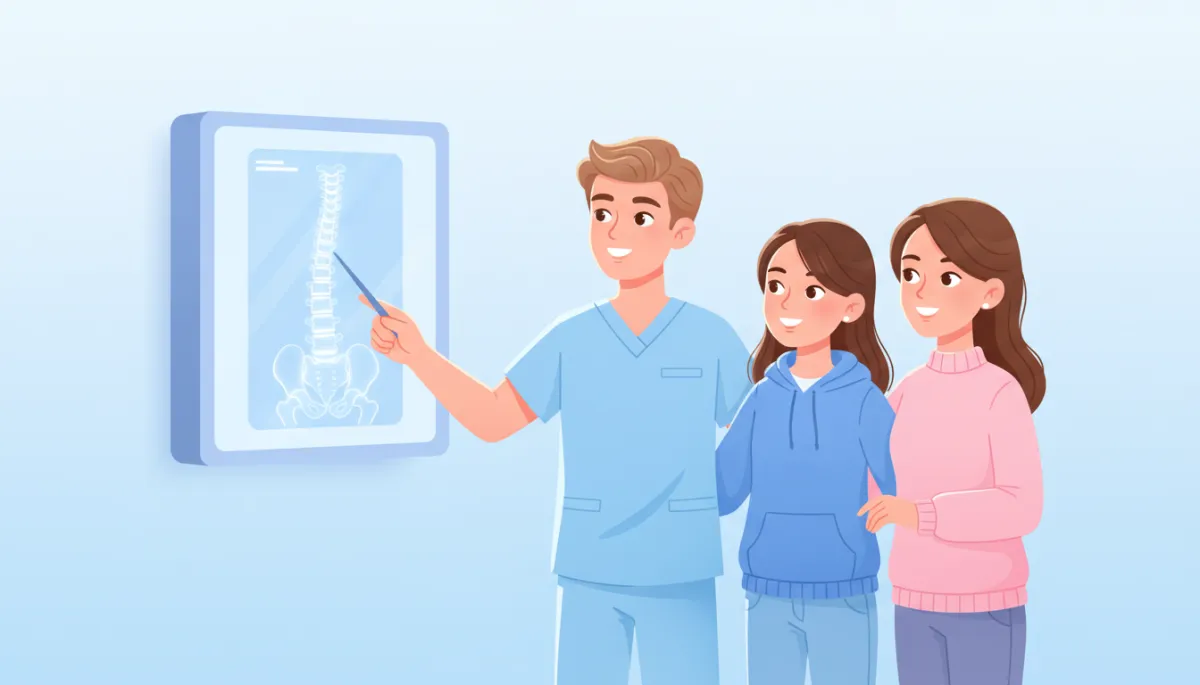
Non-Surgical Scoliosis Management in Shelton, CT
Living with scoliosis can affect much more than how your spine looks on an X-ray. When the spine curves and rotates, it may change how it feels to walk, stand, sit, sleep, and exercise.
Some people notice fatigue or aching after a long day at work or school. Others feel stiffness when driving, lifting, or trying to enjoy family activities or sports. In more advanced cases, scoliosis may even affect breathing and overall comfort during everyday tasks.
At Connecticut Disc and Laser Therapy Centers in Shelton, CT, we evaluate patients dealing with scoliosis-related back pain, postural changes, muscle tightness, nerve irritation, and other spine-related conditions.
The good news? Scoliosis does not automatically mean you will need surgery, injections, or long-term medication. For the right patient, advanced non-surgical treatment options may help reduce pain, improve mobility, calm irritated tissues, and support better function as part of a conservative care plan.
In this article, we’ll explain:
What scoliosis is and common signs to watch for
How scoliosis may affect daily life and long-term spine health
How scoliosis is typically evaluated and monitored
Non-surgical options, including advanced therapies offered in our office
When scoliosis may require more invasive medical treatment
1. What Is Scoliosis?
Scoliosis is a condition in which the spine curves sideways, often in an “S” or “C” shape, and may also rotate. It affects roughly 3% of teenagers, and in many cases, the exact cause is unknown. This is often called adolescent idiopathic scoliosis.
Many curves are mild, often between 10–15 degrees, and may not cause obvious symptoms at first. However, some curves can progress as a child or teen grows, which is why monitoring is important during growth spurts.
2. Common Signs and Symptoms of Scoliosis
Scoliosis can be subtle in the early stages. Often, parents, coaches, or healthcare providers notice changes in posture or body symmetry before pain appears. Visible signs may include:
Uneven shoulders or one shoulder sitting higher than the other
One shoulder blade appearing more prominent or “sticking out”
An uneven waistline or one hip higher than the other
A rib cage that looks more prominent on one side, especially when bending forward
In mild cases, there may be little or no pain. As curves become larger or as muscles work harder to support the spine, some people begin to notice aching, stiffness, or fatigue with standing, walking, or sports.
3. How Scoliosis Can Affect Daily Life and Health
As scoliosis progresses, the spine and rib cage can change shape. This may shorten the torso and alter how the ribs move with each breath. In more advanced curves, this can make it harder for the lungs to fully expand or for the heart to work as efficiently.
Even when curves are not severe, changes in spinal alignment and biomechanics can place extra stress on joints, discs, muscles, and ligaments. Over time, this may contribute to:
Chronic or recurring back pain
Muscle tightness and trigger points around the spine and shoulders
Fatigue with standing, walking, or physical work
Difficulty finding a comfortable position for sleep or sitting
These issues can make everyday activities—like driving, lifting, caring for children, or enjoying hobbies—more challenging. For many patients, the goal of care is to manage pain, improve function, and support long-term spine health, even if the structural curve itself does not fully straighten.
4. How Scoliosis Is Diagnosed and Monitored
A scoliosis evaluation usually begins with a detailed health history and a physical examination. The provider will look at posture from the front, back, and side, and may ask the patient to bend forward to evaluate rib prominence and spinal rotation.
Standing X-rays of the spine are typically used to confirm scoliosis and measure the degree of curvature. This measurement, often called the Cobb angle, helps determine whether the curve is mild, moderate, or severe and how closely it should be monitored over time.
In mild cases, the primary recommendation may be periodic monitoring to watch for progression, especially during growth spurts. In more significant curves, additional treatment options may be considered to help manage symptoms and slow progression when possible.
5. Traditional Medical Approaches: Bracing and Surgery
Standard medical care for scoliosis depends on the size of the curve, the patient’s age, and how quickly the curve appears to be changing. For moderate curves in growing children or teens, a back brace may be recommended to help limit progression while growth continues.
In more severe cases—especially when curves are large, progressing quickly, or affecting heart and lung function—surgery may be discussed. Surgical decisions are typically made in consultation with an orthopedic spine specialist and are based on many individual factors.
Many patients and families, however, are interested in exploring non-surgical options to help manage pain, support posture, and improve quality of life whenever appropriate.
6. Chiropractic and Movement-Based Care for Scoliosis-Related Pain
While chiropractic care does not “cure” scoliosis, it may help address some of the mechanical stress and muscle imbalances that develop around a curved spine. For the right patient, gentle chiropractic and movement-based approaches may support better mobility and comfort as part of a non-surgical care plan.
In some clinical reports, patients with scoliosis who received a combination of spinal manipulation and targeted exercises—such as posture training, core strengthening, and stability work—experienced improvements in pain and function. Some also showed stabilization or partial improvement of their curves, though individual results vary and depend on many factors, including age and curve severity.
At our office, chiropractic and movement-based care may be combined with other non-surgical therapies to create a comprehensive, individualized plan. To learn more about our approach, visit Chiropractic Care in Shelton, CT .
7. Advanced Non-Surgical Options: Spinal Decompression Therapy
In addition to traditional chiropractic methods, some patients with scoliosis-related back pain also have disc bulges, degenerative disc disease, or nerve irritation. For these patients, non-surgical spinal decompression may be considered as part of a broader care plan when appropriate.
Spinal decompression therapy uses a specialized table to gently stretch and relax the spine in a controlled pattern. This may help reduce pressure on spinal discs and nerve roots, support fluid exchange in the discs, and ease muscle guarding in selected cases. It is not a scoliosis “fix,” but for the right patient, it may help support pain relief and improved comfort.
To learn more about this technology, visit Spinal Decompression Therapy .
8. MLS Laser Therapy for Scoliosis-Related Pain and Inflammation
Scoliosis can place extra stress on joints, discs, and soft tissues, which may lead to localized inflammation and irritation. MLS Laser Therapy is an advanced light-based technology designed to help support tissue healing responses, circulation, and pain modulation in targeted areas.
For the right patient, MLS Laser Therapy may be used over painful spinal segments, muscles, or supporting ligaments to help calm irritated tissues as part of a non-surgical program. It is non-invasive and does not involve needles or medications, though individual responses can vary.
You can read more about this option at MLS Laser Therapy .
9. emField Pro High Energy Inductive Therapy for Muscle and Nerve Support
Scoliosis often leads to areas of overactive or underactive muscles along the spine. emField Pro High Energy Inductive Therapy uses high-intensity electromagnetic fields to stimulate nerves and muscles non-invasively. For certain patients, this may help support improved muscle activation, relaxation, and circulation in targeted regions.
When used as part of a broader plan that may include movement training, manual therapy, and other modalities, emField Pro therapy may help support posture and comfort for selected scoliosis patients. It is not a stand-alone scoliosis correction, but rather a tool that may complement other conservative treatments.
For more information, visit emField Pro High Energy Inductive Therapy .
10. Exercise, Posture, and Movement Strategies for Scoliosis
Targeted exercise and posture training are important components of conservative scoliosis management. These strategies focus on supporting the muscles that stabilize the spine, improving flexibility where needed, and teaching the body more efficient movement patterns.
Programs may include breathing exercises, core strengthening, gentle stretching, balance work, and activity-specific guidance. The goal is not just to “stand up straight,” but to help the spine and supporting tissues handle daily demands with less strain.
💡 Tip: Exercise programs for scoliosis are most effective when they are individualized. A proper evaluation is necessary to determine which movements are appropriate for your specific curve and symptoms.
11. When to Consider a Scoliosis Evaluation in Shelton, CT
It may be time to seek a scoliosis-focused evaluation if you or your child notice uneven shoulders, a visible curve, or a rib hump when bending forward. It is also important to be checked if back pain, stiffness, or fatigue is limiting school, work, sports, or family activities—especially during growth years.
At Connecticut Disc and Laser Therapy Centers, we take a detailed history, perform a thorough physical exam, and review any available imaging. When necessary, we may recommend additional imaging or refer to other specialists to ensure you receive appropriate, coordinated care.
12. How Scoliosis Relates to Back, Neck, and Nerve Pain
Scoliosis can change how forces travel through the spine, which may contribute to disc problems, facet joint irritation, and nerve compression over time. Some patients experience lower back pain, mid-back pain, or even radiating leg symptoms similar to sciatica when nerves are involved.
Our office routinely evaluates and treats a wide range of spine and nerve-related issues. To learn more about our broader approach to spine care, you can explore:
13. Why Patients in Shelton Choose Connecticut Disc and Laser Therapy Centers
Many patients come to our office after trying rest, ice, heat, stretching, medication, massage, physical therapy, injections, generic exercises, or a “wait and see” approach. They are often looking for a more targeted, non-surgical strategy for managing scoliosis-related pain and other spine issues.
At Connecticut Disc and Laser Therapy Centers in Shelton, CT, we focus on advanced non-surgical care for chronic pain, spine pain, joint pain, nerve irritation, muscle tightness, soft tissue irritation, arthritis-related stiffness, and other musculoskeletal conditions. Our goal is to help patients reduce pain, improve mobility, and explore conservative treatment options whenever possible.
Care is directed by Dr. James J. Dalfino , who emphasizes thorough evaluation, patient education, and individualized treatment planning. When appropriate, we coordinate with other healthcare providers to help ensure you receive well-rounded care.
Related Articles and Pages
Bottom Line
Scoliosis is a complex condition that affects spinal alignment, posture, and in some cases, breathing and heart function. While not every curve causes pain, changes in spinal mechanics can contribute to discomfort, stiffness, and activity limitations over time.
The presence of scoliosis does not automatically mean surgery, injections, or long-term medication are required. For the right patient, a thoughtful non-surgical plan—including advanced therapies like spinal decompression, MLS Laser Therapy, emField Pro High Energy Inductive Therapy, and chiropractic or movement-based care—may help reduce pain, support mobility, and improve quality of life. Individual results vary, and a proper evaluation is essential to determine the most appropriate options for your situation.
New Patient Special — $99
Comprehensive Consultation, Examination, Report of Findings, and First Treatment Included.
Connecticut Disc and Laser Therapy Centers
Dr. James J. Dalfino
2 Trap Falls Road | Suite 208 | Shelton, CT 06484
Office: 203-922-9277
Website: Connecticut Disc and Laser Therapy Centers
This article is for informational purposes only and is not intended as medical advice. Individual results vary. A proper evaluation is necessary to determine whether any treatment is appropriate for your condition.