
Knee Pain and Jumping: Causes and Injury Insights
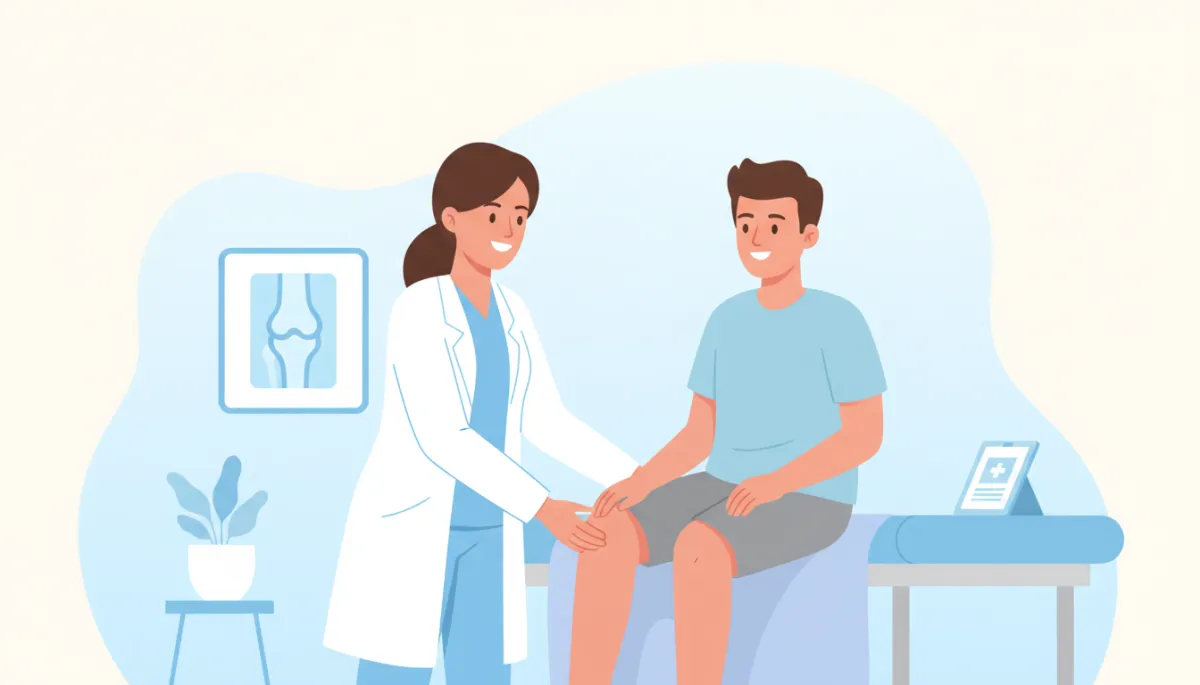
Knee Pain and Jumping Injuries: Understanding Jumper’s Knee and Non-Surgical Options in Shelton, CT
Knee pain from jumping, sports, or overuse can make even simple daily activities feel difficult. Walking up stairs, getting out of a car, standing at work, or playing with your kids may start to feel uncomfortable or painful.
Many people notice pain right at the front of the knee, especially around or just below the kneecap. It may feel worse when you jump, land, squat, kneel, or sit for long periods with your knees bent, such as driving or sitting at a desk.
At Connecticut Disc and Laser Therapy Centers in Shelton, CT, we evaluate patients dealing with knee pain, jumper’s knee, sports-related overuse injuries, and related leg, hip, and lower back problems that may affect how the knee moves and functions.
The good news?
Jumper’s knee and many other jumping-related knee injuries do not automatically require surgery, injections, or long-term medication. For the right patient, advanced non-surgical treatment options may help reduce pain, improve mobility, calm irritated tissues, and support better function as part of a comprehensive care plan.
In this article, we’ll explain:
What jumper’s knee is and why it develops
Common symptoms and how it can affect daily life and sports
The four stages of jumper’s knee and why early care matters
Lifestyle and movement factors that may increase your risk
Non-surgical treatment options, including advanced therapies available in Shelton, CT
How our team approaches knee pain and jumping injuries as part of the whole lower body
1. What Is Jumper’s Knee?
Jumper’s knee, also known as patellar tendinopathy or patellar tendonitis, involves irritation or injury to the tendon that connects your kneecap (patella) to your shinbone (tibia). This tendon helps you straighten your knee when you jump, run, walk, or climb stairs.
The original description of “jumper’s knee” focused on injury to the tendon attachment at the lower part of the kneecap or at the tibial tuberosity on the upper shinbone. Today, we know that this tendon can be stressed by repeated jumping, sudden changes in activity, or poor movement patterns over time.
2. How Common Is Jumper’s Knee?
Jumper’s knee is one of the more common tendon problems seen in athletes. It may affect up to 20% of adult athletes in sports that involve frequent jumping, such as basketball and volleyball. It is especially common among adolescent and young adult players who train and compete regularly.
However, you do not have to be a competitive athlete to develop jumper’s knee. People who work on their feet, exercise on hard surfaces, or suddenly increase their activity level may also experience this type of tendon irritation.
3. Risk Factors and Contributing Causes
Several factors may increase your risk for developing jumper’s knee or other jumping-related knee pain. These include both local knee issues and whole-body mechanics.
Sports with frequent jumping, sprinting, or sudden stops and starts
Obesity or higher body weight, which increases load on the knee joint and tendon
Bow-legged or knock-kneed alignment, which can change how forces travel through the knee
Unequal leg length, which may affect your gait and landing mechanics
Poor jumping or landing technique, especially with knees collapsing inward or stiff landings
Overstraining on hard surfaces, such as concrete courts or poorly cushioned floors
Addressing these contributing factors is an important part of long-term management, not just short-term symptom relief.
4. The Four Stages of Jumper’s Knee
The disease process for jumper’s knee is often described in four stages. Understanding where you may fall on this spectrum can help guide appropriate care.
Pain only after activity, without noticeable disability or performance loss
Pain during and after activity, but still without major disability
Prolonged pain during and after activity that begins to affect function and performance
Complete tendon tear, which typically requires surgical repair and more intensive rehabilitation
Early stages may respond well to non-surgical care when addressed properly. Waiting until pain is severe or constant may make recovery longer and more complex.
5. How Jumper’s Knee Affects Daily Life and Sports
Knee pain from jumper’s knee can show up in many parts of your day, not just during sports. You may notice:
Discomfort when walking, especially on inclines or stairs
Pain when standing from a seated position or getting out of a car
Stiffness or aching after sitting for long periods, such as at work or while driving
Trouble kneeling, squatting, or lifting, which can affect work and home tasks
Limiting sports, gym workouts, or family activities because of pain or fear of making it worse
Over time, some people change how they walk, stand, or move to “protect” the painful knee, which may place extra stress on the hips, lower back, or the other knee.
6. Evaluation: Looking at the Whole Lower Kinetic Chain
Doctors of chiropractic are trained to evaluate and treat the whole person and frequently treat athletic and overuse injuries. A successful treatment outcome for jumper’s knee usually requires both local knee care and attention to the entire lower “kinetic chain” — the foot, ankle, knee, hip, and pelvis.
A thorough exam may include:
Assessing joint function in the hip, knee, ankle, and foot
Checking muscle strength and flexibility in the quadriceps, hamstrings, calves, and gluteal muscles
Evaluating posture, gait, and movement patterns such as squatting and landing mechanics
Considering leg length differences, foot posture, and alignment issues
This whole-body approach helps identify not only where it hurts, but also why the tendon may be under extra stress.
7. Conservative Care for Jumper’s Knee: Activity and Home Strategies
Initial care for jumper’s knee often focuses on calming irritation and reducing overload on the tendon while still keeping you as active as is safely possible.
Reducing or modifying jumping activity, especially high-impact drills or hard landings
Icing the knee for 15–30 minutes, four to six times a day, especially after activity, as directed by your provider
Using activity changes rather than complete rest whenever appropriate, to help maintain strength and circulation
Your specific recommendations will depend on your exam findings, pain level, and goals for work, sports, and daily life.
8. Stretching, Strengthening, and Movement Retraining
Targeted stretching and strengthening can be an important part of non-surgical care for jumper’s knee. The goal is to improve how the knee moves and how forces are shared across the entire leg and hip, rather than asking one tendon to do all the work.
Stretching the hamstrings, calf muscles, quadriceps, hip flexors, gluteal (buttocks) muscles, iliotibial (IT) band, and tissues around the kneecap
Strengthening exercises focused on specific parts of the quadriceps, especially the vastus medialis oblique (VMO), along with other leg and hip muscles
Gradual progression of loading exercises to help the tendon adapt over time, when appropriate
In some cases, taping or bracing techniques may be used to support patellar tracking and comfort while you work on underlying strength and mobility.
9. Advanced Non-Surgical Therapies: MLS Laser and emField Pro
At Connecticut Disc and Laser Therapy Centers, we offer advanced non-surgical technologies that may help support the body’s natural healing response in soft tissues like tendons and ligaments, when appropriate for the patient and condition.
MLS Laser Therapy for Knee Tendon Irritation
MLS Laser Therapy is a non-invasive light-based therapy used to help calm irritated tissues and support circulation in the treated area. For the right patient, MLS Laser Therapy may help reduce pain and stiffness associated with tendon and soft tissue irritation as part of a broader care plan.
emField Pro High Energy Inductive Therapy
emField Pro High Energy Inductive Therapy uses high-intensity electromagnetic fields to stimulate targeted tissues. When appropriate, this technology may help support muscle activation, circulation, and comfort in patients with chronic or stubborn musculoskeletal complaints, including some cases of knee pain.
These therapies are not right for everyone. A careful evaluation is necessary to determine whether they may be appropriate for your specific knee condition and overall health.
10. Chiropractic and Movement-Based Care for Knee and Lower Body
Chiropractic and movement-based care may play a valuable role in managing jumper’s knee, especially when the problem is influenced by how the hips, pelvis, and lower back move. At our office, chiropractic care is focused on improving joint motion, alignment, and nervous system function as part of a non-surgical plan.
For some patients, Chiropractic Care in Shelton, CT may help support better movement patterns through the spine, hips, and pelvis, which can influence how the knee is loaded during walking, running, and jumping.
Movement-based strategies may include gentle exercises, posture and gait coaching, and sport-specific recommendations to help you return to activity safely, when appropriate.
11. How Knee Pain Connects to the Back, Hips, and Nerves
Knee pain does not always start in the knee alone. Stiffness or irritation in the lower back, hips, or nerves can change how you move and how your knee is loaded. For example, weakness in the gluteal muscles or tightness in the hip flexors can alter knee alignment during walking and landing.
In some cases, addressing related issues in the spine or pelvis through non-surgical care, such as Back Pain Treatment in Shelton, CT or Neck Pain Treatment in Shelton, CT, may help support more balanced movement throughout the body. This whole-body approach is especially important in athletes and active individuals.
12. When Is Spinal Decompression Relevant?
While jumper’s knee itself is a tendon problem at the front of the knee, some patients also have lower back or nerve-related symptoms that contribute to leg pain, weakness, or altered movement. In these cases, addressing spinal issues may be part of a comprehensive plan.
For the right patient, Spinal Decompression Therapy may help reduce pressure on certain spinal discs and nerves as part of non-surgical care. This is typically considered when leg symptoms are related to nerve irritation from the spine, rather than from the knee tendon alone.
13. Knee Pain Treatment Options at Connecticut Disc and Laser Therapy Centers
At our Shelton office, we focus on advanced non-surgical options for knee pain, including jumper’s knee and other overuse conditions. Depending on your exam findings, your personalized plan may include a combination of:
Activity modification and sport-specific guidance
Targeted stretching, strengthening, and movement retraining
Chiropractic and movement-based care for the spine, hips, and pelvis when appropriate
Advanced technologies such as MLS Laser Therapy and emField Pro High Energy Inductive Therapy, when appropriate
To learn more about how we approach knee pain, you can also visit our page on Knee Pain Treatment in Shelton, CT.
14. Why Patients in Shelton Choose Connecticut Disc and Laser Therapy Centers
Many patients visit our office after trying rest, ice, heat, stretching, medication, massage, physical therapy, injections, generic exercises, or a “wait and see” approach. Some improve with these methods, while others are still looking for additional non-surgical options to help manage their pain and improve function.
At Connecticut Disc and Laser Therapy Centers in Shelton, CT, we focus on advanced non-surgical care for chronic pain, spine pain, joint pain, nerve irritation, muscle tightness, soft tissue irritation, arthritis-related stiffness, and a wide range of musculoskeletal conditions, including knee pain from jumping and overuse.
Our goal is to help patients reduce pain, improve mobility, and explore conservative treatment options whenever possible. Care is individualized, and we take into account your health history, lifestyle, goals, and response to treatment over time.
To learn more about our clinical approach and experience, you can read about Dr. James J. Dalfino.
Related Articles and Pages
Bottom Line
Jumper’s knee and other jumping-related knee injuries can interfere with sports, work, and everyday activities, but they do not always require surgery or long-term medication. Early evaluation and a thoughtful, non-surgical plan may help many patients manage pain, improve mobility, and support healthier movement patterns over time.
At Connecticut Disc and Laser Therapy Centers in Shelton, CT, we combine advanced technologies with conservative care to create individualized plans for the right patients. A proper evaluation is the first step to understanding which options may be appropriate for your specific condition and goals.
New Patient Special — $99
Comprehensive Consultation, Examination, Report of Findings, and First Treatment Included.
Connecticut Disc and Laser Therapy Centers
Dr. James J. Dalfino
2 Trap Falls Road | Suite 208 | Shelton, CT 06484
Office: 203-922-9277
Website: Connecticut Disc and Laser Therapy Centers
This article is for informational purposes only and is not intended as medical advice. Individual results vary. A proper evaluation is necessary to determine whether any treatment is appropriate for your condition.