
Office Workers and Neck Pain: Causes and Solutions
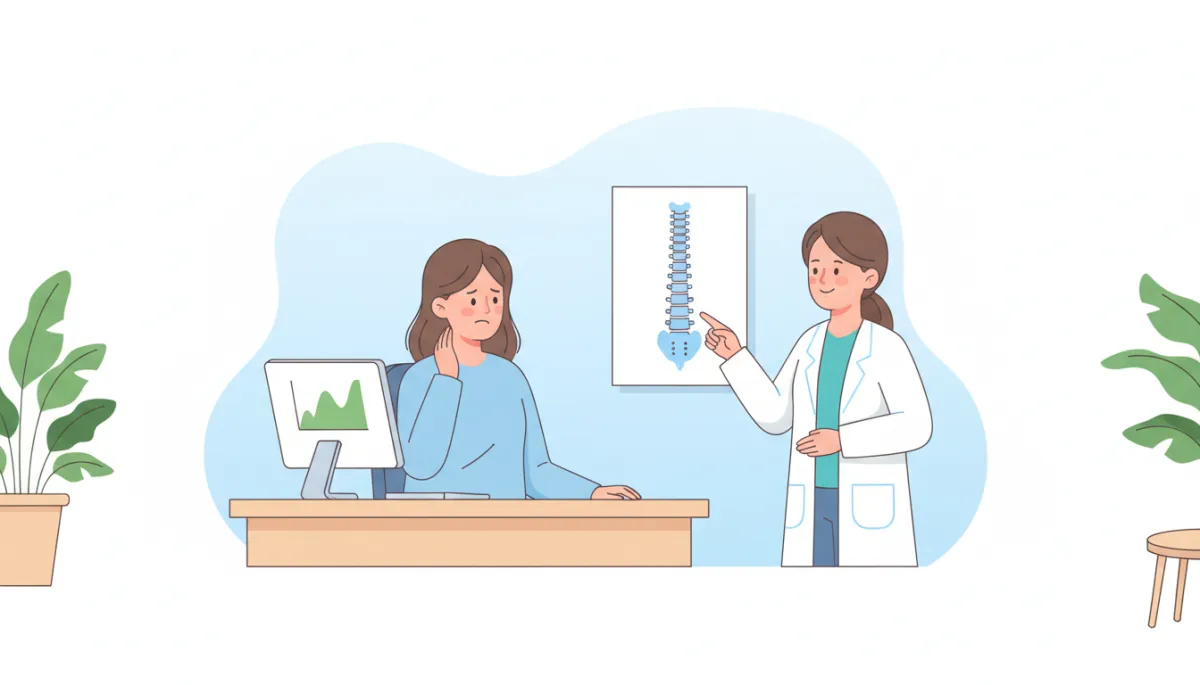
Neck Pain Among Office Workers: Non-Surgical Options in Shelton, CT
Neck pain is extremely common for people who spend long hours at a desk, on a laptop, or looking down at a phone. It can make simple daily activities—like sitting at work, driving, sleeping, or spending time with family—feel stiff, tiring, and frustrating.
You may notice aching or tightness at the base of your skull, between your shoulder blades, or across your upper back. Some people also experience headaches, shoulder discomfort, or pain that seems to “creep” into the arms and hands, especially after a long workday at the computer.
At Connecticut Disc and Laser Therapy Centers in Shelton, CT, we evaluate patients dealing with neck pain, upper back pain, tension headaches, disc-related problems, nerve irritation, and other posture-related issues that often show up in office workers and people with sedentary jobs.
The good news?
Neck pain from office work does not automatically mean you need surgery, injections, or long-term pain medication. For the right patient, advanced non-surgical treatment options may help reduce pain, improve mobility, calm irritated tissues, and support better function as part of a personalized care plan.
In This Article, We’ll Explain:
How common neck pain is among office workers
Why sitting and screen time can aggravate your neck
How daily walking and simple movement may help protect your neck
Workplace exercise strategies that may lower your risk of flare-ups
How advanced non-surgical treatments like spinal decompression and laser therapy may help
What to expect from a neck pain evaluation in our Shelton office
When to consider chiropractic and movement-based care
Why patients in Shelton choose Connecticut Disc and Laser Therapy Centers
1. How Common Is Neck Pain in Office Workers?
Neck pain is one of the most frequent reasons people seek conservative spine care, and office workers are especially affected. Research suggests that roughly 42–69% of people who work in office environments will experience neck pain at some point.
Many experience recurring episodes that come and go with busy work seasons, deadlines, or long stretches of computer use. At least one in six may go on to develop chronic, ongoing neck pain that can interfere with sleep, driving, and concentration at work.
Office-related neck pain is common, but it is not “normal.” If it is limiting your daily life, it may be worth getting it evaluated.
2. Why Desk Work Can Aggravate Your Neck
Sitting itself is not always the problem—it is how we sit and for how long. Many office workers spend hours with the head slightly forward, shoulders rounded, and eyes focused on a screen that is too low or too far away. Over time, this posture can strain the joints, discs, muscles, and ligaments in the neck and upper back.
Repetitive motions, such as using a mouse on one side, cradling the phone between your ear and shoulder, or constantly looking down at a laptop or phone, can also contribute to muscle imbalance and irritation of sensitive tissues and nerves.
3. How Daily Walking May Help Protect Your Neck
One study followed hundreds of office workers who had not experienced recent spinal pain. Participants wore pedometers and recorded any spine-related symptoms over a year. Among those who completed the study, 16% reported new neck pain during that time.
The interesting finding: for every additional 1,000 steps a participant averaged each day, the risk of developing neck pain dropped by about 14%. This suggests that simply moving more throughout the day—especially walking—may help protect office workers from future neck pain episodes.
Consider setting a gentle step goal, taking short walking breaks, or using walking meetings when possible. Even small changes may support better neck and back health over time.
4. Workplace Exercise Programs and Neck Pain Risk
Beyond walking, research has also looked at structured exercise programs in the workplace. A meta-analysis of two randomized controlled trials involving more than 500 participants found moderate-quality evidence that workplace exercise may significantly reduce the risk of developing new episodes of neck pain—by up to 68% in some groups.
In one trial, participants performed stretching and endurance exercises twice a day at work and twice a day at home. These were relatively simple routines focused on the neck, shoulders, and upper back, designed to fit into a busy workday.
5. A More Comprehensive Exercise Approach for Office Workers
The second trial used a broader program that combined strength training, stabilization exercises, aerobic activity, and body awareness work. Participants also received health information, ergonomic training, and stress management education three times a week for one hour over nine months.
This more comprehensive approach aimed not only to strengthen the neck and upper back, but also to improve posture, reduce stress-related muscle tension, and create healthier work habits. The results suggest that consistent, guided exercise and education may play a meaningful role in lowering neck pain risk for office workers.
6. Can Neck Pain Be Completely Prevented?
No strategy can guarantee that you will never experience neck pain. Life, stress, prior injuries, arthritis, and daily habits all play a role. However, the evidence suggests that regularly engaging in physical activity—especially walking and targeted exercises—may substantially lower your overall risk and may reduce how often flare-ups occur.
When neck pain does show up, addressing it early may help prevent it from becoming a long-term, chronic issue. That is where a careful evaluation and a personalized, non-surgical treatment plan may be helpful for the right patient.
7. Advanced Non-Surgical Options: Spinal Decompression Therapy
For some patients with neck pain related to disc issues, nerve irritation, or spinal compression, Spinal Decompression Therapy may be considered as part of a non-surgical treatment plan. This computer-controlled therapy is designed to gently stretch and relax the spine in a targeted way.
By creating a controlled decompressive effect, this approach may help reduce pressure on certain spinal discs and nerves, promote fluid exchange around the discs, and support a healthier environment for healing. Individual results vary, and a proper evaluation is necessary to determine whether this type of therapy is appropriate for your condition.
8. MLS Laser Therapy for Neck Pain and Irritated Tissues
Another non-surgical option we may use for certain neck and upper back conditions is MLS Laser Therapy. This technology uses specific wavelengths of light to target tissues beneath the skin. The goal is to help support circulation, reduce local inflammation, and promote a more favorable environment for tissue repair.
For the right patient, MLS Laser Therapy may help support reduced pain and stiffness in muscles, ligaments, and joints around the neck and upper back. It is typically used alongside other conservative treatments, not as a stand-alone solution.
9. emField Pro High Energy Inductive Therapy and Muscle Tension
For some cases of neck pain with significant muscle tightness or nerve irritation, emField Pro High Energy Inductive Therapy may be considered. This technology uses high-intensity electromagnetic fields to stimulate tissues in a non-invasive way.
When appropriate, this approach may help support muscle relaxation, improved local circulation, and reduced nerve-related irritation. As with all treatments, it is not right for everyone, and safety considerations and contraindications are reviewed during your evaluation.
10. Chiropractic and Movement-Based Care for Office-Related Neck Pain
Many patients with office-related neck pain benefit from a combination of gentle spinal care, specific exercises, and posture education. Chiropractic Care in Shelton, CT may include precise, controlled adjustments or mobilization techniques intended to improve joint motion and reduce mechanical stress on the neck and upper back.
Movement-based care often involves targeted stretching, strengthening, and stabilization exercises. These may help support better posture, increased endurance of postural muscles, and more comfortable sitting, standing, driving, and working at the computer. Home exercises and workplace strategies are usually part of the plan so you can continue making progress between visits.
11. What to Expect From a Neck Pain Evaluation in Shelton, CT
During your visit, we start by listening to your story—how long you have had neck pain, what makes it better or worse, and how it affects your work and daily life. We will ask about your medical history, prior imaging, and any treatments you have already tried, such as rest, medication, massage, physical therapy, or injections.
A hands-on examination may include checking your posture, range of motion, muscle strength, nerve function, and specific orthopedic tests. When appropriate, we may review or recommend imaging studies. The goal is to identify likely pain generators and determine whether non-surgical options are appropriate for your situation.
12. Building a Personalized, Non-Surgical Plan for Neck Pain
If you are a good candidate for conservative care, your plan may include a blend of therapies tailored to your needs. This might involve spinal decompression, MLS Laser Therapy, emField Pro High Energy Inductive Therapy, chiropractic care, and specific home exercises, depending on your condition and goals.
We will also discuss practical changes you can make at work and at home—such as desk ergonomics, walking routines, micro-breaks, and stretching strategies—to help support your neck between visits. The focus is on helping you move better, feel more comfortable, and better manage your condition over time. Individual results vary, and progress is monitored and adjusted as needed.
13. Why Patients in Shelton Choose Connecticut Disc and Laser Therapy Centers
Many patients come to our office after trying rest, ice, heat, stretching, medication, massage, physical therapy, injections, generic exercises, or a “wait and see” approach. They are often looking for a more focused, non-surgical strategy to address ongoing neck pain and related symptoms.
At Connecticut Disc and Laser Therapy Centers in Shelton, CT, we focus on advanced non-surgical care for chronic pain, spine pain, joint pain, nerve irritation, muscle tightness, soft tissue irritation, arthritis-related stiffness, and other musculoskeletal conditions. Our goal is to help patients reduce pain, improve mobility, and explore conservative treatment options whenever possible.
Care is directed by Dr. James J. Dalfino, who has a strong focus on non-surgical spine and joint care. For the right patient, combining advanced technologies with hands-on care and practical lifestyle guidance may offer a more comprehensive approach than any single treatment alone.
14. Related Articles and Pages
Bottom Line
Neck pain among office workers is common, but it does not have to control your workday or your life. Simple habits like walking more, doing targeted exercises, and improving your workstation setup may help lower your risk and reduce flare-ups over time.
For the right patient, advanced non-surgical options—such as spinal decompression therapy, MLS Laser Therapy, emField Pro High Energy Inductive Therapy, and chiropractic or movement-based care—may help reduce pain, improve mobility, and support healthier function in the neck and upper back. A proper evaluation is the first step in determining which options, if any, are appropriate for your specific condition.
New Patient Special — $99
Comprehensive Consultation, Examination, Report of Findings, and First Treatment Included.
Connecticut Disc and Laser Therapy Centers
Dr. James J. Dalfino
2 Trap Falls Road | Suite 208 | Shelton, CT 06484
Office: 203-922-9277
Website: Connecticut Disc and Laser Therapy Centers
This article is for informational purposes only and is not intended as medical advice. Individual results vary. A proper evaluation is necessary to determine whether any treatment is appropriate for your condition.