
The Neck's Role in Headaches: Understanding the Link
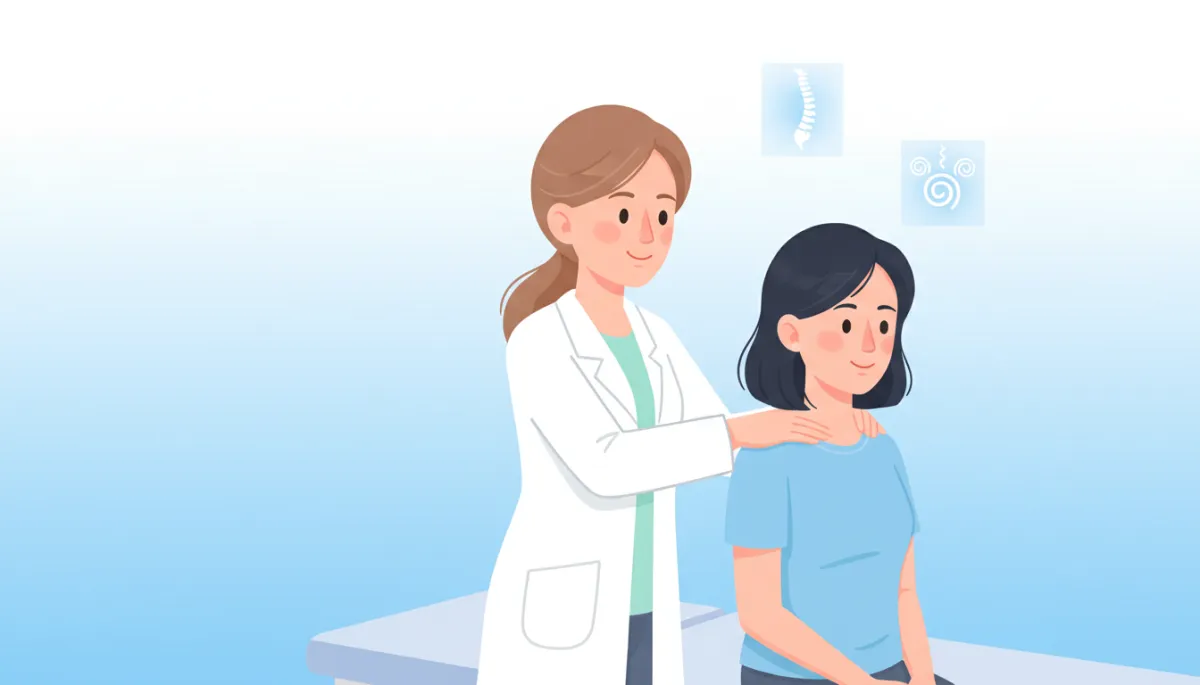
The Neck and Its Relationship to Headaches: Advanced Non-Surgical Options in Shelton, CT
Frequent headaches can make everyday life feel exhausting. Simple activities like working at a computer, driving, looking down at your phone, or playing with your kids may become uncomfortable or even unbearable when your head and neck hurt.
Many patients notice that their headaches worsen after long periods of sitting, poor posture, lifting, or even trying to sleep in a comfortable position. Over time, this can affect your ability to focus at work, exercise regularly, and enjoy family activities.
At Connecticut Disc and Laser Therapy Centers in Shelton, CT, we evaluate patients dealing with neck pain, tension headaches, cervicogenic headaches, migraines with neck involvement, and related spine and nerve conditions.
The good news?
Headaches related to the neck do not automatically require surgery, injections, or long-term dependence on medication. For the right patient, advanced non-surgical treatment options may help reduce pain, improve mobility, calm irritated tissues, and support better function as part of a comprehensive care plan.
In this article, we’ll explain:
How the neck can contribute to headaches (cervicogenic headaches)
Common daily activities and postures that may aggravate neck-related headaches
How advanced non-surgical treatments may help support neck and headache relief
When spinal decompression, laser therapy, and inductive therapy may be appropriate
How chiropractic and movement-based care may support long-term improvement
Why patients in Shelton choose Connecticut Disc and Laser Therapy Centers
1. What Is a Cervicogenic Headache?
Experts estimate that headaches affect roughly half of the population. Research suggests that up to 25% of these headaches may actually start in the neck. This type of headache is called a cervicogenic headache (CGH).
With cervicogenic headaches, pain is often referred from the joints, discs, muscles, or nerves in the cervical spine (neck) up into the head. Patients may feel pain at the base of the skull, behind the eyes, or on one side of the head, often linked to neck movement or posture.
Note: Not all headaches come from the neck. A careful evaluation is essential to determine the likely source of your symptoms and whether neck-focused treatment is appropriate.
2. How Neck Problems Can Trigger or Worsen Headaches
The neck is made up of vertebrae, discs, joints, ligaments, muscles, and nerves that all work together to support the head and allow movement. When these structures become irritated, stiff, or overloaded, they may refer pain into the head and face.
Common contributors include joint dysfunction, muscle tension, poor posture, disc irritation, or nerve irritation originating in the upper cervical spine. Over time, this can lead to recurring headaches that seem to “start in the neck” or worsen with certain neck positions.
3. Daily Activities and Postures That May Aggravate Neck-Related Headaches
Many patients notice that certain activities make their headaches worse. These often include:
Long hours of computer work or looking down at a laptop or tablet
Texting or scrolling on a phone with the head bent forward (“tech neck”)
Driving for long periods without breaks
Sleeping with too many pillows or a poor pillow height
Repetitive lifting, overhead work, or awkward neck positions at work
Over time, these stresses may contribute to forward head posture, muscle tightness, and joint irritation, all of which may play a role in cervicogenic headaches and other neck-related pain.
4. Chiropractic and Movement-Based Care for Neck-Related Headaches
Research has shown that chiropractic management may be helpful for some patients with cervicogenic headaches, especially when it focuses on restoring better motion and mechanics in the cervical spine. At our office, chiropractic and movement-based care are used as part of a broader, non-surgical treatment plan when appropriate.
Care may include gentle spinal manipulation, targeted mobilization, soft tissue techniques, and specific exercises designed to support better neck function. The goal is to help reduce mechanical stress in the neck that may be contributing to your headaches and related symptoms.
To learn more about how this type of care may fit into your treatment plan, visit Chiropractic Care in Shelton, CT.
5. Spinal Manipulation and Gentle Mobilization: Improving Neck Mechanics
There are multiple methods of spinal manipulation used to improve joint movement in the neck. These can be broadly grouped into:
High-velocity, low-amplitude (thrust) techniques: Often associated with a joint “popping” sound (cavitation), which is simply gas releasing within the joint.
Low-velocity, low-amplitude (non-thrust) techniques: Sometimes called mobilization, these involve slower, controlled movements without a thrust, and cavitation is less common.
At Connecticut Disc and Laser Therapy Centers, the choice of technique is based on your condition, comfort level, and clinical findings. Some patients respond well to gentle mobilization, while others may benefit from more traditional chiropractic adjustments. Individual results vary, and no single technique is right for everyone.
6. Targeted Exercise: Supporting the Deep Neck Muscles
Exercise alone may not be as effective as hands-on care for some cervicogenic headaches, but research suggests that combining specific exercises with spinal manipulation may provide longer-lasting and more satisfying results for the right patient.
Exercises that target the deep neck flexors and postural muscles may help support better alignment and stability. These exercises are typically gentle, focused on control rather than intensity, and are progressed gradually based on your tolerance and response.
Always perform neck exercises under professional guidance at first. Doing the wrong exercises—or doing them too aggressively—may aggravate symptoms in some patients.
7. Nerve Flossing and Soft Tissue Techniques Around the Base of the Skull
Tension around the base of the skull, where important nerves pass from the neck into the head, may aggravate headache symptoms in some patients. Gentle nerve “flossing” and soft tissue techniques are sometimes used to help reduce irritation in this region when appropriate.
These methods typically involve carefully guided head and arm movements combined with soft tissue work to the muscles at the base of the skull. The goal is to help improve mobility and reduce tension around the nerves, not to force or overstretch the area.
Because the upper neck is a sensitive area, techniques are selected and modified based on your comfort, medical history, and response to care.
8. Ergonomic and Postural Coaching: Reducing Daily Neck Strain
Even the best treatment plan can be undermined by poor daily habits. That is why ergonomic and activity advice is an important part of care for many patients with neck-related headaches.
Your provider may review your work setup, driving position, sleep posture, and common hobbies to identify ways to reduce the load on your neck and upper back. Forward head posture is extremely common and may be improved with simple changes such as adjusting screen height, using a headset, or changing how you sit and stand throughout the day.
Small ergonomic changes, repeated day after day, may help reduce the strain that contributes to neck tension and headaches over time.
9. Spinal Decompression Therapy for Neck and Headache-Related Conditions
For some patients, disc-related issues in the cervical spine may play a role in neck pain and associated headaches. When appropriate, non-surgical spinal decompression therapy may be considered as part of a treatment plan to gently relieve pressure on spinal discs and nerve roots.
Spinal decompression uses a specialized table and computer-controlled traction to apply a gentle, targeted distraction to the spine. The goal is to create a more favorable environment for the discs and surrounding tissues. Some patients report decreased neck pain and improved comfort with certain head and arm positions after a series of sessions, though individual results vary.
To explore this option further, visit Spinal Decompression Therapy.
10. MLS Laser Therapy: Calming Irritated Tissues
MLS Laser Therapy is an advanced light-based treatment used to help support tissue healing and reduce inflammation in many musculoskeletal conditions. When used around the neck and upper back, it may help calm irritated muscles, ligaments, and soft tissues that contribute to neck pain and some headache patterns.
Treatments are non-invasive and typically well-tolerated. Patients usually feel only a gentle warmth or no sensation at all during the session. MLS Laser Therapy is often combined with other non-surgical approaches, such as spinal decompression or chiropractic care, as part of a customized plan.
Learn more at MLS Laser Therapy.
11. emField Pro High Energy Inductive Therapy: Supporting Muscles and Nerves
emField Pro High Energy Inductive Therapy uses a high-intensity electromagnetic field to stimulate muscles and tissues deep below the surface. For the right patient, this technology may help support improved circulation, reduced muscle tension, and better neuromuscular activation in the neck and upper back region.
Sessions are non-invasive and do not require needles or surgery. Many patients describe a tapping or pulsing sensation in the treatment area. As with all therapies, individual responses vary, and this option is best considered as part of a comprehensive, non-surgical plan after a proper evaluation.
For more information, visit emField Pro High Energy Inductive Therapy.
12. Neck Pain, Headaches, and Related Conditions We Commonly See
Patients with neck-related headaches often have other overlapping issues, such as chronic neck pain, upper back tightness, or radiating pain into the shoulders and arms. At our Shelton office, we frequently evaluate:
Chronic neck pain and stiffness
Cervicogenic headaches and tension-type headaches with neck involvement
Disc bulges or herniations in the cervical spine
Nerve irritation causing arm pain, tingling, or numbness
Postural strain from desk work, driving, or repetitive tasks
If your headaches seem to be linked to neck movement, posture, or previous neck injuries, a focused evaluation may help clarify whether your cervical spine is playing a role in your symptoms.
To learn more about our approach to neck conditions, visit Neck Pain Treatment in Shelton, CT.
13. How We Build a Personalized, Non-Surgical Plan for Neck-Related Headaches
At Connecticut Disc and Laser Therapy Centers, we do not believe in one-size-fits-all care. Instead, we start with a detailed consultation and examination to understand your history, symptoms, daily activities, and goals. When needed, we review or recommend appropriate imaging or diagnostic studies.
Based on these findings, your non-surgical plan may include a combination of:
Spinal decompression therapy when appropriate
MLS Laser Therapy for soft tissue support
emField Pro High Energy Inductive Therapy for muscles and nerves
Chiropractic or movement-based care focused on neck mechanics
Targeted home exercises and posture coaching
Individual results vary, and not every therapy is right for every patient. Our goal is to match the most appropriate non-surgical options to your specific condition and comfort level.
14. Why Patients in Shelton Choose Connecticut Disc and Laser Therapy Centers
Many patients come to our office after trying rest, ice, heat, stretching, medication, massage, physical therapy, injections, generic exercises, or a “wait and see” approach—yet they still struggle with neck pain and recurring headaches that interfere with daily life.
At Connecticut Disc and Laser Therapy Centers in Shelton, CT, we focus on advanced non-surgical care for chronic pain, spine pain, joint pain, nerve irritation, muscle tightness, soft tissue irritation, arthritis-related stiffness, and a wide range of musculoskeletal conditions, including neck-related headaches.
Our goal is to help patients reduce pain, improve mobility, and explore conservative treatment options whenever possible. We take the time to explain your condition, answer questions, and outline realistic expectations so you can make informed decisions about your care.
To learn more about our practice and clinical approach, visit Connecticut Disc and Laser Therapy Centers and Dr. James J. Dalfino.
Related Articles and Pages
Bottom Line
Neck-related headaches, including cervicogenic headaches, can significantly affect your ability to work, drive, sleep, exercise, and enjoy time with family. In many cases, the neck plays a bigger role in headache pain than patients realize, especially when posture, joint mechanics, and soft tissue irritation are involved.
The encouraging news is that surgery and injections are not the only options. For the right patient, a thoughtful combination of advanced non-surgical treatments—such as spinal decompression, MLS Laser Therapy, emField Pro High Energy Inductive Therapy, and chiropractic or movement-based care—may help reduce pain, improve neck function, and support better quality of life. A proper evaluation is the first step in determining which options may be appropriate for your specific situation.
New Patient Special — $99
Comprehensive Consultation, Examination, Report of Findings, and First Treatment Included.
Connecticut Disc and Laser Therapy Centers
Dr. James J. Dalfino
2 Trap Falls Road | Suite 208 | Shelton, CT 06484
Office: 203-922-9277
Website: Connecticut Disc and Laser Therapy Centers
This article is for informational purposes only and is not intended as medical advice. Individual results vary. A proper evaluation is necessary to determine whether any treatment is appropriate for your condition.