Waking Up With Lower Back Pain in Shelton, CT
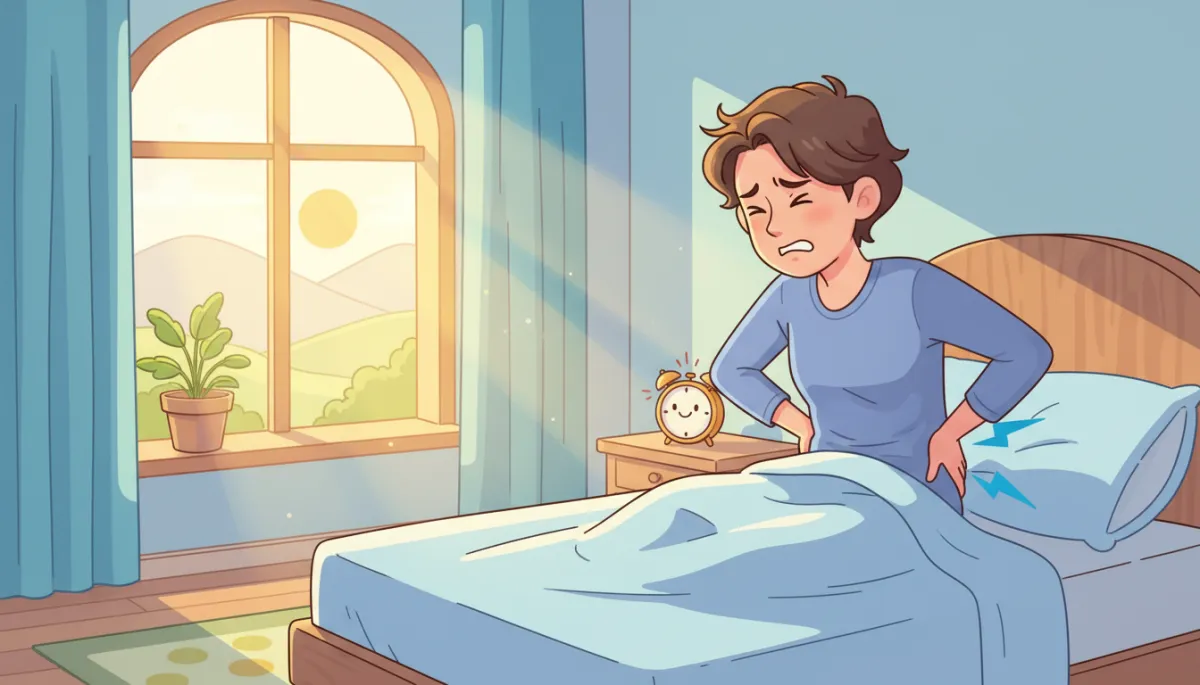
Waking up with lower back pain can ruin your morning before the day even starts.
Sometimes it feels like stiffness.
Sometimes it feels like a deep ache.
Other times, it feels sharp when you try to roll out of bed, stand up, or take your first few steps.
For many people, morning lower back pain improves after moving around for a while.
But when it keeps happening day after day, there may be an underlying reason.
At Connecticut Disc and Laser Therapy Centers in Shelton, CT, we evaluate patients dealing with lower back pain, morning stiffness, disc problems, sciatica, arthritis-related pain, muscle tightness, joint stiffness, nerve irritation, poor posture, and chronic spine-related conditions.
The good news?
Morning back pain does not automatically mean you need surgery, injections, or long-term medication.
For the right patient, advanced non-surgical treatment options may help reduce pain, improve mobility, calm irritated tissues, and support better function.
In this article, we’ll explain:
why lower back pain may feel worse in the morning
common causes of morning back stiffness
how sleeping position can affect your spine
when mattress problems may contribute
when symptoms should be evaluated
non-surgical treatment options
what to expect during an evaluation
1. Why Lower Back Pain Can Feel Worse in the Morning
Morning lower back pain is common.
After lying down for several hours, your spine, muscles, joints, and discs may feel stiff when you first start moving again.
For some people, this stiffness fades after walking around, stretching, showering, or getting the body warmed up.
For others, the pain lingers.
Morning back pain may be related to:
poor sleeping position
mattress support problems
joint stiffness
disc irritation
arthritis
muscle tightness
inflammation
poor posture
spinal degeneration
lack of movement
old injuries
stress-related muscle tension
A little stiffness once in a while may not be a major concern.
But lower back pain that happens almost every morning should not be ignored.
📌 Key Takeaway: Morning lower back pain may come from sleeping position, stiffness, inflammation, disc irritation, arthritis, muscle guarding, or poor spinal mechanics.
2. Sleeping Position and Lower Back Pain
Your sleeping position can place stress on your lower back.
If your spine is not supported properly overnight, pressure may build in the joints, muscles, ligaments, and discs.
This can make the lower back feel tight, sore, or painful when you first get up.
Stomach sleeping is a common problem.
Sleeping on your stomach can increase stress on the lower back because it may force the spine into an extended position for hours.
It may also require the neck to stay rotated to one side, creating additional strain.
If you wake up with lower back pain, you may want to try:
sleeping on your side with a pillow between your knees
sleeping on your back with a pillow under your knees
avoiding stomach sleeping when possible
placing a pillow under the lower abdomen if stomach sleeping is unavoidable
keeping the spine in a more neutral position
using a pillow that supports the neck properly
Small changes in sleep position can sometimes make a noticeable difference.
But if pain continues, there may be more going on than posture alone.
📌 Key Takeaway: Poor sleeping position can stress the lower back overnight and contribute to morning pain or stiffness.
3. Mattress Support and Morning Back Pain
An old or unsupportive mattress can also contribute to lower back pain.
If a mattress sags, dips, or fails to support the spine evenly, the lower back may stay in a strained position overnight.
This can lead to stiffness and pain when getting out of bed.
A mattress that is too soft may allow the hips and pelvis to sink too far.
A mattress that is too firm may create pressure points and prevent the spine from resting comfortably.
Signs your mattress may be contributing to back pain include:
you wake up stiff almost every morning
your back feels better after sleeping somewhere else
your mattress visibly sags
you roll into the same dip every night
your mattress is more than several years old
you toss and turn because you cannot get comfortable
your pain improves after moving around
There is no perfect mattress for everyone.
The right mattress should support your spine, match your body type, and allow you to sleep without excessive pressure on the lower back.
📌 Key Takeaway: A worn-out or poorly supportive mattress may contribute to morning lower back pain.
4. Disc Degeneration and Morning Stiffness
Disc degeneration can develop naturally over time.
The spinal discs lose hydration, height, and flexibility as part of the aging process.
For some people, these changes cause little to no pain.
For others, disc degeneration may contribute to lower back stiffness, soreness, and recurring flare-ups.
Symptoms may include:
morning lower back stiffness
pain after sitting
pain with bending
pain with lifting
reduced flexibility
tightness when first standing
flare-ups that come and go
pain that improves with gentle movement
Disc degeneration does not automatically mean surgery is needed.
It also does not mean injections are the only option.
For the right patient, conservative care may help reduce irritation, improve mobility, and support better function.
That may include Spinal Decompression Therapy, MLS Laser Therapy, emField Pro High Energy Inductive Therapy, and movement-based care when appropriate.
📌 Key Takeaway: Disc degeneration can contribute to morning stiffness, but treatment should be based on symptoms, exam findings, and function — not imaging alone.
5. Arthritis and Joint Stiffness
Arthritis in the lower back can also make mornings difficult.
Spinal arthritis may cause inflammation, stiffness, and reduced motion in the joints of the spine.
This stiffness is often more noticeable after periods of rest.
That is one reason some people feel worse first thing in the morning and better after moving around.
Arthritis-related lower back pain may include:
morning stiffness
aching in the lower back
pain that improves with movement
pain that worsens after inactivity
reduced range of motion
difficulty standing upright
flare-ups after activity
tightness through the hips or pelvis
The goal is not to “reverse arthritis.”
The goal is to reduce irritation, improve motion, and help the patient function more comfortably.
📌 Key Takeaway: Arthritis-related lower back pain often feels worse after rest and may improve once the body gets moving.
6. Muscle Tightness and Poor Posture
Muscle tightness is another common cause of morning lower back pain.
The muscles of the lower back, hips, pelvis, and legs all influence how the spine feels.
If those muscles are tight, guarded, weak, or overworked, they can increase stress on the lower back.
Common contributors include:
sitting too long
poor posture
weak core support
tight hip flexors
tight hamstrings
stress
lack of movement
repetitive bending
old injuries
poor sleep position
Muscles may tighten overnight, especially if the body is already irritated.
Then, when you stand up in the morning, the lower back may feel stiff, guarded, or painful.
This is why some people improve after walking around.
Movement increases circulation and helps the muscles relax.
7. Pregnancy and Morning Lower Back Pain
Pregnancy can also contribute to lower back pain.
As the body changes, the lower back may experience added strain from weight changes, posture changes, ligament relaxation, and altered movement mechanics.
Lower back pain during pregnancy can happen early, but it is often more common as pregnancy progresses.
Helpful strategies may include:
using proper support while sleeping
placing a pillow between the knees
avoiding sudden twisting when getting up
using the legs to stand instead of straining the back
gentle movement when approved by a healthcare provider
discussing symptoms with an OB/GYN or appropriate provider
Pregnancy-related back pain should be evaluated if symptoms are severe, worsening, or associated with concerning symptoms.
⚠️ Important: Pregnant patients should always speak with their healthcare provider before beginning any new treatment or exercise program.
8. Morning Stretches That May Help
Gentle morning movement may help some people reduce stiffness.
The goal is not to force the spine.
The goal is to wake the body up gradually.
Before getting out of bed, some people may benefit from gentle movements such as:
slow knee-to-chest stretch
gentle lower back rocking
light hamstring movement
deep breathing
slowly rolling to the side before sitting up
Once standing, gentle movement may include:
short walking
light side bending
gentle hip mobility
easy standing stretches
slow posture resets
A plank or squat may be useful for some people, but not everyone should start there.
If you have disc pain, sciatica, nerve symptoms, weakness, or severe pain, certain exercises may aggravate symptoms.
That is why evaluation matters before starting a more aggressive exercise routine.
📌 Key Takeaway: Gentle morning movement may help stiffness, but exercises should be matched to your condition.
9. Why Morning Back Pain Keeps Coming Back
Pain that keeps returning usually has a reason.
It may be related to:
disc irritation
joint stiffness
arthritis
muscle guarding
poor sleeping position
poor mattress support
inflammation
weakness
poor movement mechanics
old injuries
sciatica
nerve irritation
repetitive stress
lack of mobility
Many patients only treat the symptom.
They stretch for a few minutes.
They use heat.
They take medication.
They change pillows.
They try to “walk it off.”
Sometimes that helps temporarily.
But if the underlying issue is still there, the pain often comes back.
That is where a more complete evaluation can help.
The goal is to identify what may be driving the morning pain, not just manage it day by day.
10. When Morning Lower Back Pain Should Be Checked
You should consider scheduling an evaluation if your lower back pain:
happens most mornings
lasts more than a few weeks
keeps returning
is getting worse
travels into the buttock or leg
causes numbness or tingling
causes weakness
affects sleep
makes it hard to stand up straight
limits walking, lifting, or exercise
does not improve with movement
has not improved with home care
Morning stiffness that improves quickly may be manageable.
But pain that persists, worsens, or travels into the leg should be evaluated.
⚠️ Seek urgent medical care if you experience loss of bowel or bladder control, numbness in the groin or saddle area, severe weakness, fever with severe back pain, major trauma, chest pain, shortness of breath, or symptoms that feel like a medical emergency.
📌 Key Takeaway: Morning back pain that keeps returning, worsens, or causes leg symptoms should not be ignored.
11. Non-Surgical Treatment Options for Morning Lower Back Pain
At Connecticut Disc and Laser Therapy Centers, treatment depends on what is actually causing the symptoms.
The goal is not to use the same treatment for every patient.
The goal is to identify what may be driving the pain and build care around the patient’s condition, symptoms, and goals.
Non-surgical options may include:
spinal decompression therapy
MLS Laser Therapy
emField Pro High Energy Inductive Therapy
chiropractic or movement-based care when appropriate
activity modification
home care recommendations
postural recommendations
progress checks
Spinal Decompression Therapy
Spinal Decompression Therapy may be considered for certain patients with disc-related back pain, herniated discs, bulging discs, degenerative discs, sciatica, or nerve irritation.
Spinal decompression is designed to gently reduce pressure on spinal discs and irritated nerves.
For the right patient, this may help:
reduce pressure on spinal discs
reduce irritation around affected nerves
support improved disc nutrition
improve mobility
decrease disc-related pain
reduce sciatica-related symptoms
Spinal decompression is not appropriate for everyone, so evaluation is necessary before beginning treatment.
MLS Laser Therapy
MLS Laser Therapy uses specific wavelengths of light designed to penetrate deeper tissues and support healing at the cellular level.
For lower back pain, MLS Laser Therapy may help support:
reduced inflammation
decreased pain
improved circulation
calmer irritated soft tissues
tissue recovery
improved mobility
reduced stiffness
MLS Laser Therapy may be considered when inflammation, soft tissue irritation, joint pain, or chronic tissue stress are contributing to symptoms.
emField Pro High Energy Inductive Therapy
emField Pro High Energy Inductive Therapy, also known as HEIT, uses high-intensity electromagnetic energy to stimulate deeper tissues.
For the right patient, HEIT may help support:
deep tissue stimulation
muscle activation
circulation
mobility
pain reduction
soft tissue recovery
reduction of muscle spasm
improved tolerance to movement
HEIT may be considered when muscle guarding, chronic tightness, joint stiffness, nerve sensitivity, or soft tissue irritation are contributing to lower back pain.
Chiropractic and Movement-Based Care
Chiropractic care may help improve joint mobility, reduce stiffness, and address mechanical problems that contribute to lower back pain.
Depending on the patient, care may include attention to:
spinal mobility
joint motion
posture
muscle guarding
movement mechanics
soft tissue tightness
activity modification
home care recommendations
For some patients, morning back pain is not only about sleep.
The way the spine, hips, pelvis, and legs move throughout the day may be contributing to the problem.
12. What to Expect During an Evaluation
A treatment plan should start with a proper evaluation.
That may include:
review of symptoms
health history
orthopedic testing
neurological screening when appropriate
movement assessment
functional testing
discussion of sleeping position
discussion of mattress support
review of prior treatment
review of goals
recommendations based on findings
If non-surgical care is appropriate, your treatment plan may include:
spinal decompression therapy when appropriate
MLS Laser Therapy when appropriate
HEIT when appropriate
chiropractic or movement-based care when appropriate
home care recommendations
activity modifications
postural recommendations
progress checks
Some patients notice improvement quickly.
Others need a structured series of visits before meaningful progress occurs.
The number of treatments depends on the condition, severity, how long symptoms have been present, and how the patient responds.
📌 Key Takeaway: The right treatment plan should be based on why the morning back pain is happening, not just the fact that the back hurts.
13. Why Patients in Shelton Choose Connecticut Disc and Laser Therapy Centers
Patients often come to our office after trying:
stretching
heat
ice
new pillows
new mattresses
pain medication
massage
physical therapy
generic exercises
“wait and see”
Many are frustrated because they still wake up stiff, sore, tight, or limited in the morning.
At Connecticut Disc and Laser Therapy Centers in Shelton, CT, we focus on advanced non-surgical care for lower back pain, disc problems, sciatica, arthritis-related stiffness, muscle tightness, joint stiffness, nerve irritation, and chronic musculoskeletal conditions.
Our goal is to help patients reduce pain, improve mobility, and explore conservative treatment options whenever possible.
You can learn more about Dr. James J. Dalfino and his clinical background on our website.
Related Articles and Pages
For more information, these pages may be helpful:
Back Pain Treatment in Shelton, CT
Spinal Decompression Therapy
MLS Laser Therapy
emField Pro High Energy Inductive Therapy
Chiropractic Care in Shelton, CT
Sciatica Treatment in Shelton, CT
Neck Pain Treatment in Shelton, CT
Contact Connecticut Disc and Laser Therapy Centers
Bottom Line
Waking up with lower back pain can be frustrating, especially when it happens day after day.
Sometimes the cause is simple, such as sleep position or mattress support.
Other times, morning lower back pain may be related to disc irritation, arthritis, joint stiffness, muscle guarding, inflammation, poor movement mechanics, or nerve irritation.
At Connecticut Disc and Laser Therapy Centers in Shelton, CT, we help patients explore advanced non-surgical options such as spinal decompression therapy, MLS Laser Therapy, emField Pro High Energy Inductive Therapy, and movement-based care when appropriate.
The key is finding out what is actually causing the symptoms.
Once that is clear, the treatment plan can be built around the patient — not just the symptom.
New Patient Special — $99
Comprehensive Consultation, Examination, Report of Findings, and First Treatment Included.
Connecticut Disc and Laser Therapy Centers
Dr. James J. Dalfino
2 Trap Falls Road | Suite 208 | Shelton, CT 06484
Office: 203-922-9277
Website: Connecticut Disc and Laser Therapy Centers


