Back Pain Treatment in Shelton, CT
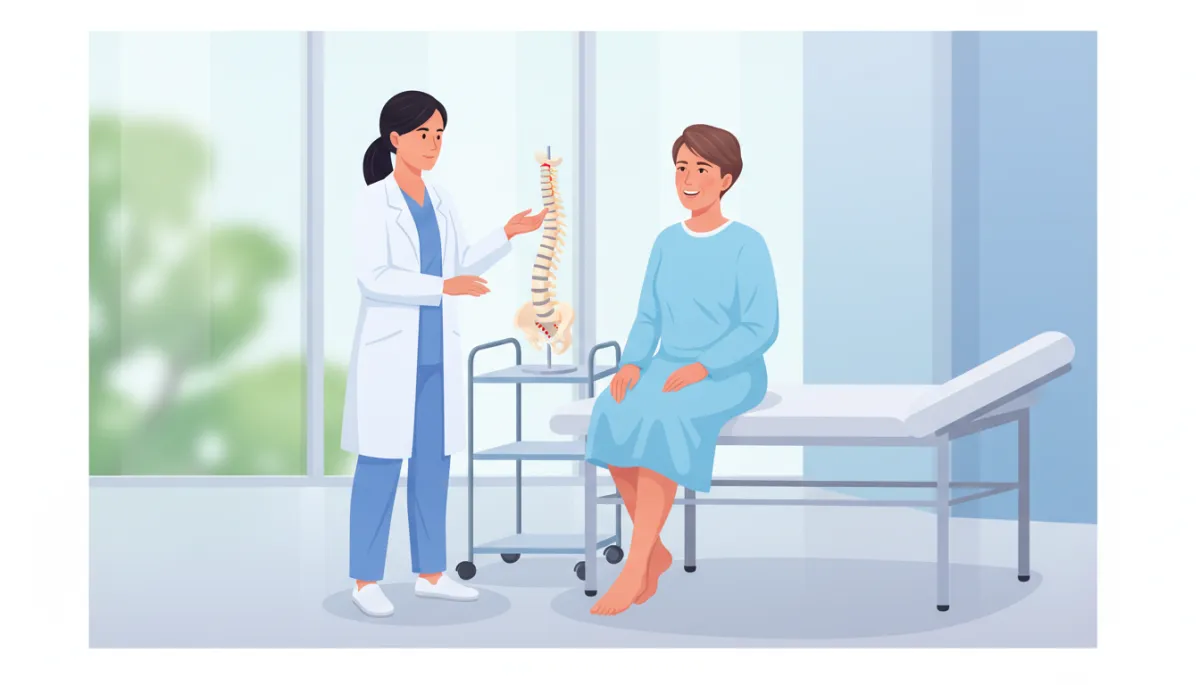
Back pain can take over your life quickly.
Sometimes it starts as a dull ache.
Other times, it shows up as sharp pain, stiffness, muscle spasms, or pain that travels down the leg.
For many people, back pain affects sitting, standing, walking, sleeping, lifting, working, exercising, and enjoying normal daily activities.
At Connecticut Disc and Laser Therapy Centers in Shelton, CT, we evaluate patients dealing with chronic back pain, lower back pain, herniated discs, bulging discs, degenerative disc disease, spinal stenosis, sciatica, muscle spasms, arthritis-related pain, and nerve irritation.
The good news?
Back pain does not automatically mean surgery is the next step.
For the right patient, advanced non-surgical treatment options may help reduce pain, improve mobility, calm irritated tissues, and support better function.
In this article, we’ll explain:
what causes back pain
common symptoms to watch for
when back pain should be evaluated
non-surgical treatment options
how spinal decompression, MLS Laser Therapy, and HEIT may help
when to schedule an evaluation
1. What Causes Back Pain?
Back pain can happen for many reasons.
The spine is made up of discs, joints, nerves, muscles, ligaments, and connective tissues that all work together to support movement and stability.
When one part of that system becomes irritated, inflamed, compressed, strained, or injured, pain can follow.
Common causes of back pain may include:
herniated discs
bulging discs
degenerative disc disease
spinal stenosis
sciatica
pinched nerves
arthritis
muscle strain
ligament sprain
poor posture
repetitive stress
old injuries
poor movement mechanics
Some back pain starts suddenly after lifting, twisting, falling, or exercising.
Other back pain builds gradually over time from posture, aging, repetitive activity, disc changes, or joint irritation.
That is why a proper evaluation matters.
The goal is to identify what is actually causing the pain, not just temporarily cover it up.
📌 Key Takeaway: Back pain can come from discs, joints, nerves, muscles, ligaments, or a combination of several factors.
2. Herniated Discs and Bulging Discs
Disc problems are a common cause of lower back pain and sciatica.
A spinal disc acts like a cushion between the bones of the spine.
When a disc bulges or herniates, it may irritate nearby nerves and cause pain.
Symptoms may include:
lower back pain
pain traveling into the buttock or leg
sciatica
numbness or tingling
leg weakness
pain with sitting
pain with bending or lifting
stiffness in the lower back
Some patients describe disc-related pain as sharp, burning, shooting, or electric.
Others feel deep pressure, tightness, or pain that worsens with certain positions.
For certain patients with disc-related pain, Spinal Decompression Therapy may be considered as part of a non-surgical treatment plan.
📌 Key Takeaway: Herniated and bulging discs may irritate nearby nerves and cause lower back pain, sciatica, numbness, tingling, or weakness.
3. Degenerative Disc Disease
Degenerative disc disease occurs when spinal discs lose hydration, height, and normal function over time.
This can lead to increased stress on the joints, nerves, muscles, and soft tissues of the spine.
Symptoms may include:
chronic lower back pain
stiffness
pain with sitting
pain with standing
flare-ups that come and go
reduced flexibility
pain that worsens with activity
pain that improves with position changes
Degenerative disc disease does not always mean severe pain.
Some people have disc degeneration and minimal symptoms.
Others develop chronic pain and mobility limitations.
The difference often depends on inflammation, mechanics, nerve irritation, muscle guarding, and how the spine is functioning overall.
📌 Key Takeaway: Degenerative disc disease can contribute to chronic back pain, stiffness, flare-ups, and reduced mobility.
4. Spinal Stenosis
Spinal stenosis occurs when the spaces within the spine become narrowed.
This narrowing can place pressure on nerves.
Symptoms may include:
lower back pain
leg pain
numbness or tingling
weakness in the legs
difficulty standing for long periods
difficulty walking longer distances
symptoms that improve with sitting or leaning forward
Some patients with spinal stenosis notice they can walk only a short distance before needing to sit down.
Others feel heaviness, fatigue, or weakness in the legs when standing.
Treatment depends on the severity of the condition, the patient’s symptoms, and whether nerve compression is involved.
📌 Key Takeaway: Spinal stenosis may cause back pain, leg symptoms, and difficulty walking or standing for extended periods.
5. Sciatica
Sciatica refers to pain that travels along the sciatic nerve.
This pain often starts in the lower back or buttock and travels into the leg.
Sciatica may be caused by:
herniated discs
bulging discs
degenerative disc disease
spinal stenosis
nerve irritation
muscle tightness
joint dysfunction
Symptoms may include:
pain down the leg
burning pain
shooting pain
numbness
tingling
weakness
pain with sitting
pain with bending
Sciatica is not just “leg pain.”
It is often a sign that a nerve is irritated.
That is why sciatica should be evaluated, especially when symptoms persist or worsen.
You can learn more about Sciatica Treatment in Shelton, CT.
📌 Key Takeaway: Sciatica often means a nerve is irritated, commonly from a disc, joint, or spinal condition.
6. Muscle Strains, Spasms, and Mechanical Back Pain
Not all back pain comes from discs.
Muscles, ligaments, joints, and movement patterns can also create significant pain.
Back pain may develop from:
improper lifting
sudden twisting
overexertion
sports injuries
poor posture
long periods of sitting
weak core support
repetitive bending
old injuries
stress-related muscle tension
Muscle spasms can be especially painful.
They may make it difficult to stand upright, walk normally, bend forward, or get comfortable in bed.
Sometimes muscle pain improves quickly.
Other times, it keeps coming back because the underlying mechanics, inflammation, or movement problem has not been addressed.
📌 Key Takeaway: Muscle strain and spasms can cause severe back pain, even when the problem is not disc-related.
7. Common Back Pain Symptoms to Watch For
Back pain is not always limited to the back.
Depending on the cause, symptoms may include:
lower back pain
mid back pain
stiffness
reduced flexibility
muscle spasms
pain traveling into the buttock or leg
sciatica
numbness or tingling in the leg or foot
weakness
difficulty standing
difficulty walking
pain with sitting
pain with lifting
pain that affects sleep
You should consider scheduling an evaluation if your back pain:
lasts more than a few weeks
keeps returning
is getting worse
travels into the leg
causes numbness or tingling
causes weakness
limits walking, standing, lifting, or exercise
affects sleep
affects work or daily activities
does not improve with rest
has not improved with prior treatment
⚠️ Seek urgent medical care if you experience loss of bowel or bladder control, numbness in the groin or saddle area, severe weakness, fever with severe back pain, major trauma, chest pain, shortness of breath, or symptoms that feel like a medical emergency.
📌 Key Takeaway: Back pain that travels, causes numbness or weakness, affects sleep, or limits daily function should be evaluated.
8. Non-Surgical Back Pain Treatment Options
Many patients want to avoid surgery, injections, and long-term medication whenever possible.
That does not mean every patient can avoid those options.
But it does mean conservative care may be worth exploring first when appropriate.
At Connecticut Disc and Laser Therapy Centers, treatment depends on what is actually causing the back pain.
The goal is not to use the same plan for every patient.
The goal is to identify the pain generator and build care around the patient’s condition, symptoms, and goals.
Spinal Decompression Therapy
Spinal Decompression Therapy may be considered for certain patients with disc-related back pain, herniated discs, bulging discs, degenerative discs, sciatica, or nerve irritation.
Spinal decompression is designed to gently stretch the spine in a controlled manner.
For the right patient, this may help:
reduce pressure on spinal discs
reduce irritation around affected nerves
support improved disc nutrition
improve mobility
decrease disc-related pain
reduce sciatica-related symptoms
Spinal decompression is not appropriate for every patient.
That is why evaluation is important before beginning care.
📌 Key Takeaway: Spinal decompression may be an option for certain patients with disc-related back pain or sciatica.
MLS Laser Therapy
MLS Laser Therapy uses specific wavelengths of light designed to penetrate deeper tissues and support healing at the cellular level.
For back pain, MLS Laser Therapy may help support:
reduced inflammation
decreased pain
improved circulation
calmer irritated soft tissues
tissue recovery
improved mobility
reduced stiffness
MLS Laser Therapy may be used when inflammation, soft tissue irritation, joint pain, muscle strain, or chronic tissue stress are contributing to symptoms.
It is non-invasive, comfortable, and does not require downtime.
📌 Key Takeaway: MLS Laser Therapy may help calm inflammation and support tissue recovery in certain patients with back pain.
emField Pro High Energy Inductive Therapy
emField Pro High Energy Inductive Therapy, also known as HEIT, uses high-intensity electromagnetic energy to stimulate deeper tissues.
For the right patient, HEIT may help support:
deep tissue stimulation
muscle activation
circulation
mobility
pain reduction
soft tissue recovery
reduction of muscle spasm
improved tolerance to movement
HEIT may be considered when muscle guarding, chronic tightness, joint stiffness, nerve sensitivity, or soft tissue irritation are contributing to back pain.
It is non-invasive and does not require downtime.
📌 Key Takeaway: HEIT may help stimulate deeper tissues involved in pain, stiffness, muscle guarding, and movement restriction.
Chiropractic and Movement-Based Care
Chiropractic care may help improve joint mobility, reduce stiffness, and address mechanical problems that contribute to back pain.
Depending on the patient, care may include attention to:
spinal mobility
joint motion
posture
muscle guarding
movement mechanics
soft tissue tightness
activity modification
home care recommendations
For many patients, back pain is not only about the painful area.
The way the hips, spine, pelvis, and legs move may be placing extra stress on the lower back.
That is why care should be based on a complete evaluation, not guesswork.
9. Why Choose a Non-Surgical Approach?
Surgery may be necessary in some cases.
But many back pain patients are better served by exploring conservative options first when appropriate.
Non-surgical care may offer several advantages:
no surgical incision
no anesthesia
no surgical recovery period
lower risk than surgery
less downtime
focus on improving function
ability to combine multiple conservative therapies
treatment tailored to the patient’s condition
The goal is not just to reduce pain temporarily.
The goal is to improve how the body is functioning so the patient can move better and tolerate daily activity more comfortably.
📌 Key Takeaway: For many patients, non-surgical care is a reasonable first step before considering more invasive options.
10. Why Back Pain Keeps Coming Back
Recurring back pain usually has a reason.
It may be related to:
disc pressure
nerve irritation
inflammation
joint stiffness
muscle guarding
poor movement mechanics
weakness
arthritis
old injuries
repetitive stress
poor posture
overuse
compensation patterns
Many patients treat back pain only when it flares.
They rest.
They stretch.
They take medication.
They use heat or ice.
Sometimes that helps temporarily.
But if the underlying problem is still there, the pain often comes back.
That is where a more complete evaluation can help.
The goal is to find out what is driving the pain, not just chase symptoms every time they flare up.
11. What to Expect During an Evaluation
A proper treatment plan should start with an evaluation.
That may include:
review of symptoms
health history
orthopedic testing
neurological screening when appropriate
movement assessment
functional testing
discussion of prior treatment
review of goals
recommendations based on findings
If non-surgical care is appropriate, your treatment plan may include:
spinal decompression when indicated
MLS Laser Therapy when appropriate
HEIT when appropriate
chiropractic or movement-based care
home care recommendations
activity modifications
progress checks
Some patients notice improvement quickly.
Others need a structured series of visits before meaningful progress occurs.
The number of treatments depends on the condition, severity, how long symptoms have been present, and how the patient responds.
📌 Key Takeaway: The right back pain treatment plan should be based on the cause of the pain, not just the location of the symptoms.
12. Why Patients in Shelton Choose Connecticut Disc and Laser Therapy Centers
Patients often come to our office after trying:
rest
ice
heat
stretching
medication
massage
physical therapy
injections
generic exercises
“wait and see”
Many are frustrated because they still cannot sit, stand, walk, sleep, work, lift, drive, or move comfortably.
At Connecticut Disc and Laser Therapy Centers in Shelton, CT, we focus on advanced non-surgical care for back pain, disc problems, sciatica, nerve irritation, arthritis-related pain, joint stiffness, muscle spasm, and chronic musculoskeletal conditions.
Our goal is to help patients reduce pain, improve mobility, and explore conservative options whenever possible.
You can learn more about Dr. James J. Dalfino and his clinical background on our website.
Related Articles and Pages
For more information, these pages may be helpful:
Spinal Decompression Therapy
MLS Laser Therapy
emField Pro High Energy Inductive Therapy
Chiropractic Care in Shelton, CT
Sciatica Treatment in Shelton, CT
Neck Pain Treatment in Shelton, CT
Knee Pain Treatment in Shelton, CT
Contact Connecticut Disc and Laser Therapy Centers
Bottom Line
Back pain can come from many different causes, including herniated discs, bulging discs, degenerative disc disease, spinal stenosis, sciatica, arthritis, muscle strain, joint stiffness, and nerve irritation.
But back pain does not automatically mean surgery is the only option.
At Connecticut Disc and Laser Therapy Centers in Shelton, CT, we help patients explore advanced non-surgical options such as spinal decompression, MLS Laser Therapy, emField Pro High Energy Inductive Therapy, chiropractic care, and movement-based treatment.
The key is finding out what is actually causing the pain.
Once that is clear, the treatment plan can be built around the patient — not just the symptom.
New Patient Special — $99
Comprehensive Consultation, Examination, Report of Findings, and First Treatment Included.
Connecticut Disc and Laser Therapy Centers
Dr. James J. Dalfino
2 Trap Falls Road | Suite 208 | Shelton, CT 06484
Office: 203-922-9277
Website: Connecticut Disc and Laser Therapy Centers


