
Knee Pain Treatment · Shelton, Connecticut
Knee pain can make
every step feel harder.
Whether your knee hurts walking, climbing stairs, standing up from a chair, or simply getting through the day, the first step is understanding what may be contributing to the problem.
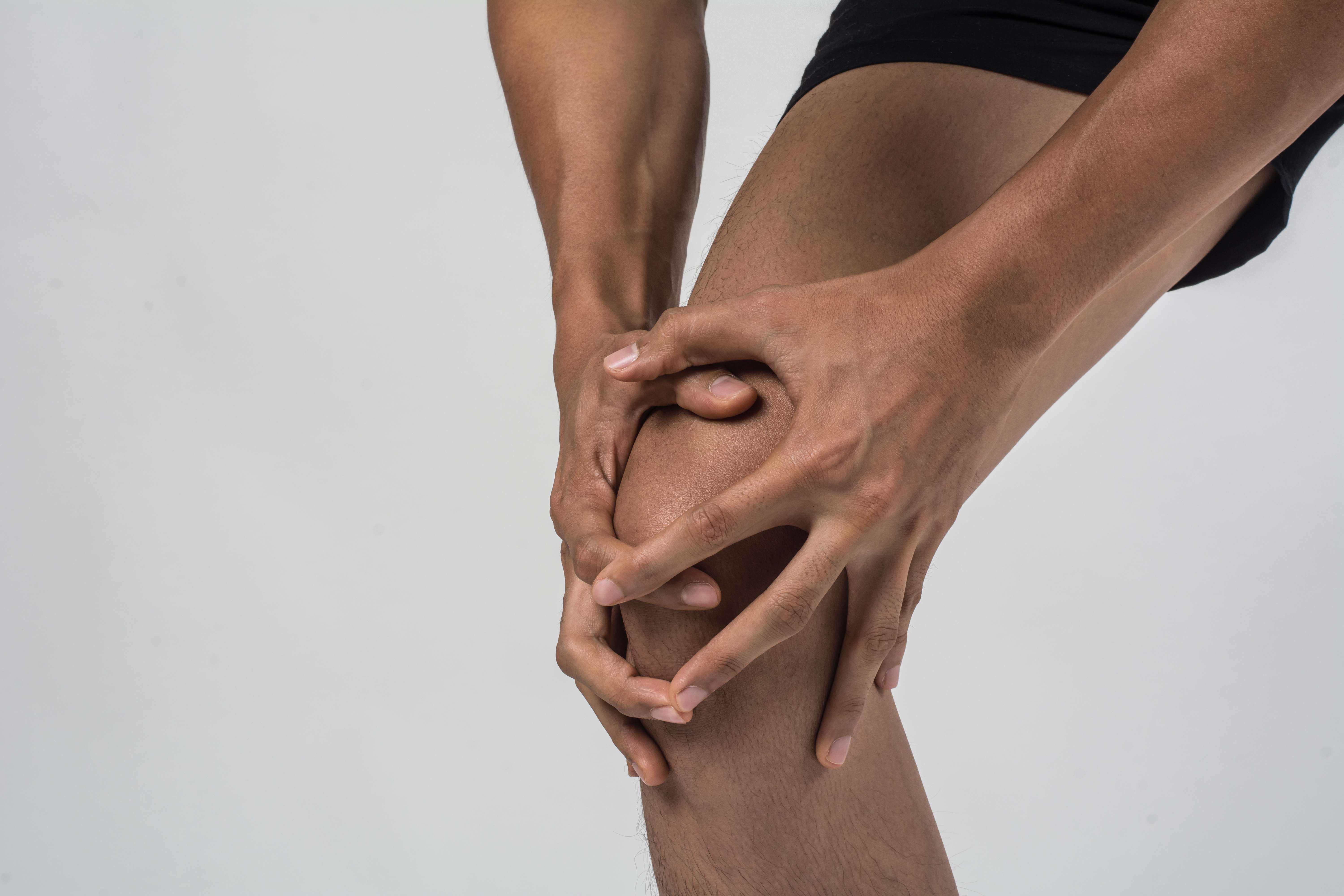
Why patients come to us for knee pain
The problem is not always just the joint.
Knee pain may involve arthritis, joint irritation, meniscus-related symptoms, reduced mobility, muscle guarding, weakness, or a combination of factors.
That is why we start with an evaluation rather than assuming every painful knee should be treated the same way.
Many patients come to us because they want to explore conservative, non-surgical treatment options before deciding whether injections or surgery are the right next step for them.
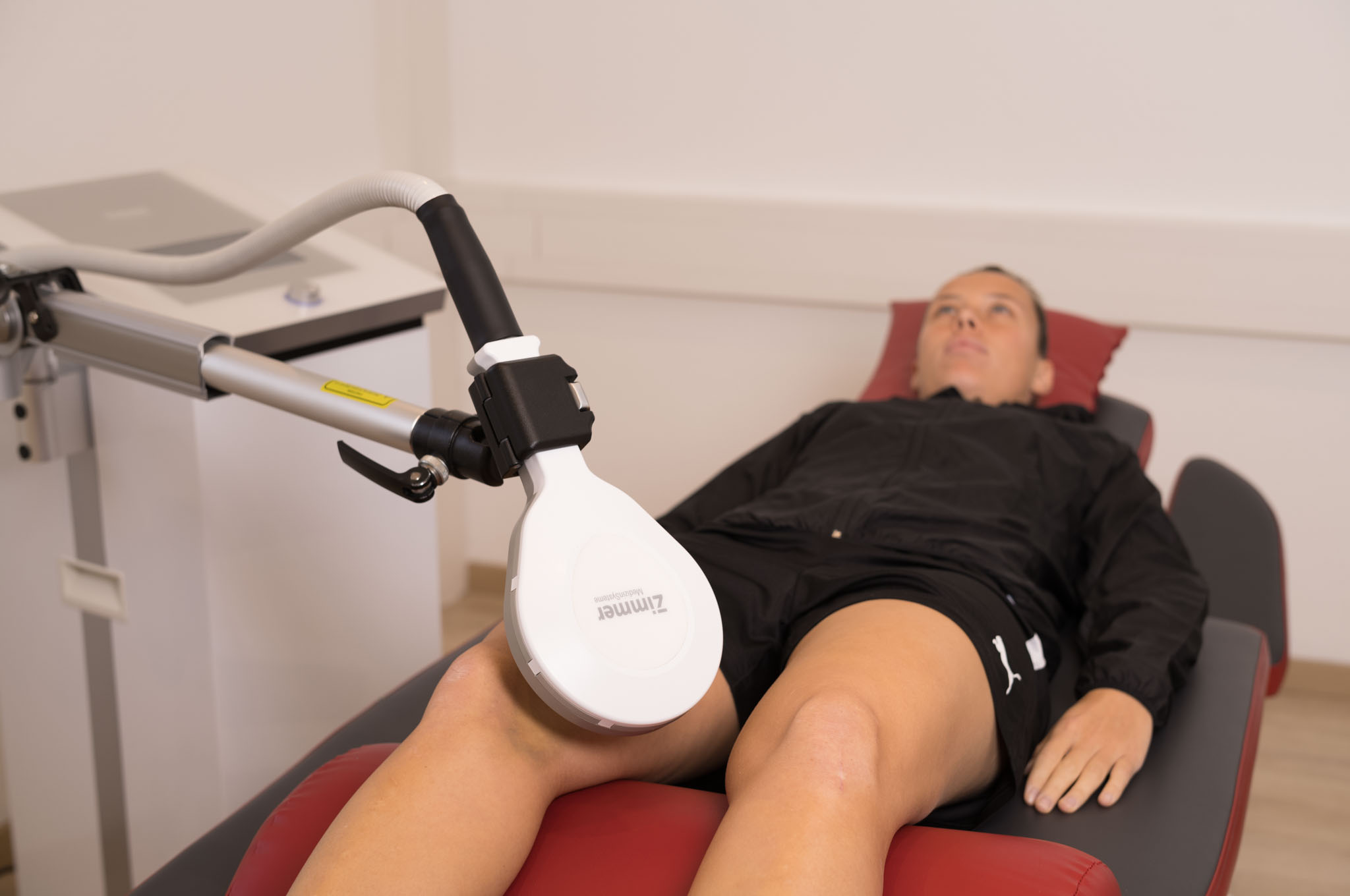
A more focused approach
Less “wait and see.”
More understanding first.
The goal is to identify the pattern of your knee pain, determine whether conservative care is appropriate, and build a treatment plan around your specific findings rather than a one-size-fits-all protocol.
Common knee problems we evaluate
Knee pain shows up in different ways.
Knee arthritis
Achiness, stiffness, swelling, reduced motion, or pain with activity.
Bone-on-bone pain
Degenerative joint changes that may make walking, stairs, or standing difficult.
Meniscus irritation
Joint-line discomfort, catching, stiffness, or pain with bending and twisting.
Chronic stiffness
A knee that feels tight, restricted, or difficult to get moving.
Pain climbing stairs
Symptoms that increase when going up or down steps.
Pain getting out of a chair
Discomfort, weakness, or hesitation during sit-to-stand movement.
Persistent pain after prior care
Symptoms that continue despite rest, medications, injections, or rehabilitation.
Trying to stay active
Pain that is limiting walking, exercise, work, golf, or everyday activity.
Non-surgical treatment options
Technology selected for your knee.
Depending on your evaluation, your care may include MLS Laser Therapy, EmField Pro High Energy Inductive Therapy, Pulse PEMF, or a combination of these technologies.
MLS Laser Therapy
Non-invasive therapeutic light energy that may be used in selected musculoskeletal treatment plans to help reduce discomfort and support normal tissue response.
Explore MLS Laser Therapy ›EmField Pro
High Energy Inductive Therapy uses electromagnetic stimulation without mechanical impact. It may be incorporated when muscle function, movement, and local tissue irritation are part of the clinical picture.
Explore EmField Pro ›Pulse PEMF
Pulsed electromagnetic field therapy may be used as part of selected conservative care plans to support comfort, circulation, and recovery.
Explore Pulse PEMF ›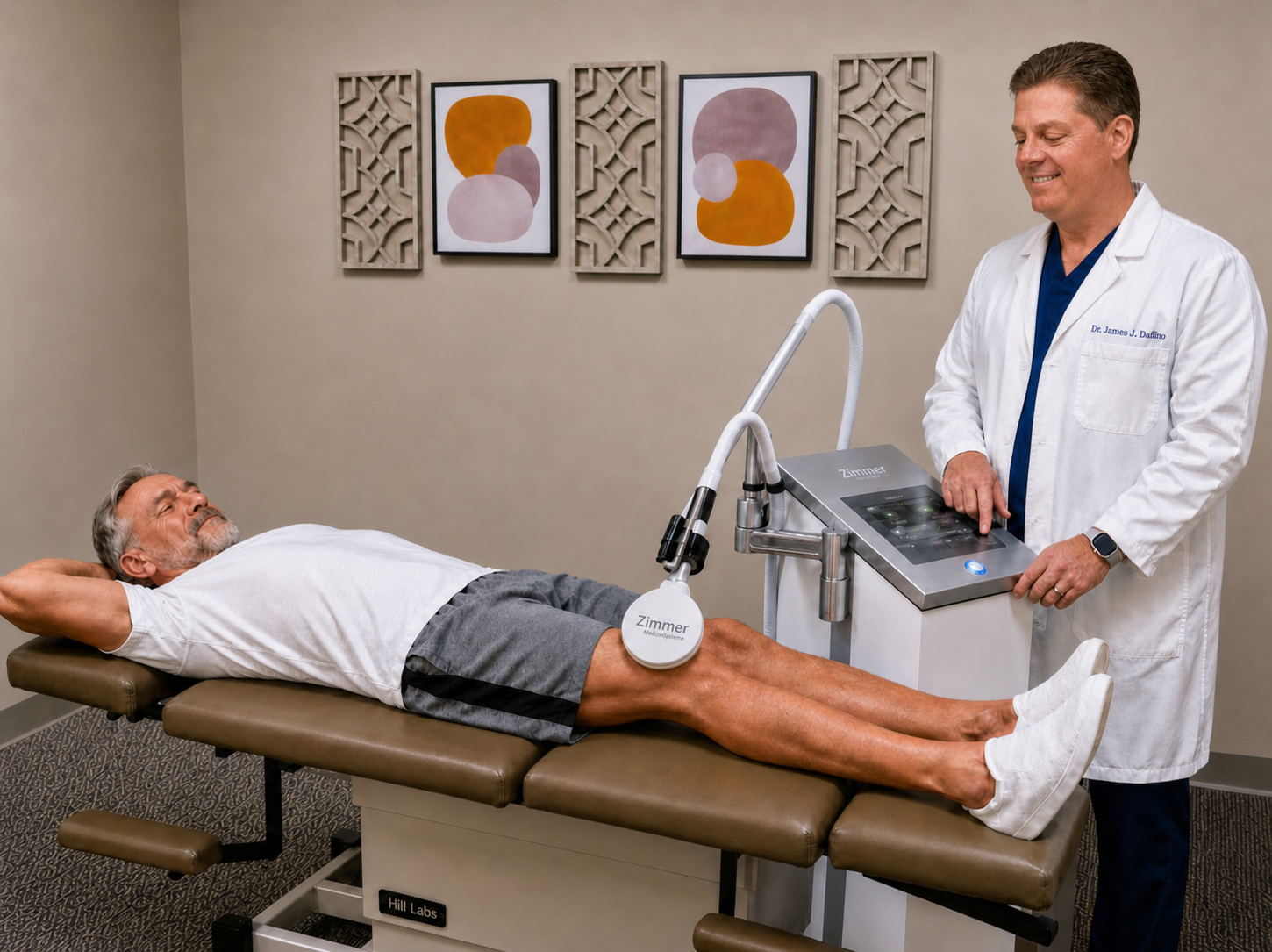
Why HEIT and laser may be considered
Knee arthritis is more than a picture on an X-ray.
Degenerative changes may be part of the story, but pain can also be influenced by joint irritation, inflammation, muscle guarding, weakness, and reduced mobility.
That is why the goal of treatment is not to promise that arthritis can be “reversed.” The goal is to determine whether non-surgical care may help improve comfort, movement, and day-to-day function.
Some patients respond well. Others may need additional medical or orthopedic care. Your evaluation helps determine what is reasonable for your specific case.

Meet Dr. James J. Dalfino
More than 25 years evaluating musculoskeletal pain.
Dr. Dalfino has spent more than 25 years working with patients with musculoskeletal pain and chronic conditions. His approach starts with understanding the problem, then determining whether the technologies in the office are a good fit.
Meet Dr. Dalfino ›Frequently asked questions
Knee pain, answered.
Do you treat knee arthritis?
We evaluate patients with knee arthritis and other degenerative knee conditions. Whether care in our office is appropriate depends on your symptoms, examination findings, health history, and overall condition.
Can treatment help if I have been told I am bone-on-bone?
Some patients with advanced degenerative changes still explore conservative options for symptom management and function. Treatment does not regrow missing cartilage or guarantee that surgery can be avoided.
Do you treat meniscus pain?
We evaluate knee pain that may involve meniscus irritation, but not every meniscus problem is appropriate for conservative care. Locking, significant instability, acute trauma, or other red flags may require orthopedic evaluation.
Do you use laser therapy on the knee?
MLS Laser Therapy may be used in selected knee cases as part of a conservative treatment plan. It is not automatically the right option for every patient.
What is EmField Pro treatment like?
EmField Pro uses high-energy electromagnetic stimulation. Patients generally feel strong muscle contractions or pulsing during treatment. Intensity is adjusted to a strong but comfortable level.
How quickly should I expect improvement?
Response varies from patient to patient. Your diagnosis, severity, duration of symptoms, activity level, health history, and treatment consistency can all affect how you respond. No specific result or timeline can be guaranteed.
Take the first step
Find out what may be
driving your knee pain.
Start with a one-on-one consultation and examination with Dr. Dalfino at Connecticut Disc and Laser Therapy Centers in Shelton.
New Patient Special
Consultation · Examination · Report of Findings · First Treatment
Schedule My New Patient VisitExplore Knee Arthritis
Learn more about evaluation, care planning and common questions.
Knee Arthritis care in Shelton →