PEMF Therapy for Pain Relief and Recovery in Shelton, CT
Pain can make your body feel older than it should.
Stiff joints.
Tight muscles.
Slow recovery.
Aching that keeps coming back.
For many patients, the problem is not just pain itself. It is the way pain starts affecting daily life — walking, sleeping, exercising, working, standing, driving, or simply moving comfortably.
At Connecticut Disc and Laser Therapy Centers in Shelton, CT, we evaluate patients dealing with chronic pain, joint stiffness, muscle tightness, inflammation, arthritis-related pain, back pain, neck pain, knee pain, hip pain, shoulder pain, foot pain, nerve irritation, and recovery from soft tissue injuries.
The good news?
Not every pain problem requires surgery, injections, or long-term medication.
For the right patient, Pulsed Electromagnetic Field therapy, commonly known as PEMF therapy, may help support pain relief, mobility, circulation, and tissue recovery as part of a non-surgical treatment plan.
In this article, we’ll explain:
what PEMF therapy is
how PEMF works
what conditions it may help
what treatment feels like
who may be a good candidate
how PEMF fits into a broader care plan
when to schedule an evaluation
1. What Is PEMF Therapy?
PEMF stands for Pulsed Electromagnetic Field therapy.
It uses low-frequency electromagnetic pulses to stimulate tissues in the body.
The goal is to support cellular activity, circulation, tissue recovery, and better function in areas affected by pain, stiffness, inflammation, or chronic irritation.
PEMF therapy is non-invasive.
There are no needles.
There are no incisions.
There is no medication.
There is no downtime.
PEMF may be considered for patients dealing with:
back pain
neck pain
knee pain
hip pain
shoulder pain
arthritis-related stiffness
muscle tightness
joint stiffness
soft tissue irritation
tendon irritation
bursitis
sciatica-related discomfort
chronic inflammation
slow recovery after strain or sprain injuries
circulation-related concerns
general musculoskeletal pain
Some patients say:
“I feel stiff all the time, and my body just does not bounce back like it used to.”
That is when a more complete evaluation may help determine whether PEMF therapy belongs in the treatment plan.
📌 Key Takeaway: PEMF therapy is a non-invasive treatment designed to stimulate tissues and support the body’s natural recovery processes.
2. How PEMF Therapy Works
PEMF therapy uses pulsed electromagnetic energy to stimulate targeted areas of the body.
These pulses pass into muscles, joints, tendons, ligaments, and soft tissues.
The goal is to help support healthier tissue function, improved circulation, reduced irritation, and better mobility.
For the right patient, PEMF may help support:
cellular activity
circulation
oxygen delivery
tissue recovery
mobility
pain reduction
reduction of stiffness
muscle relaxation
joint comfort
inflammatory regulation
Many patients describe PEMF as a gentle pulsing or tapping sensation.
Others feel warmth, relaxation, loosening, or a calming effect during or after treatment.
Treatment is typically comfortable and does not require downtime.
📌 Key Takeaway: PEMF therapy is designed to stimulate tissues below the surface and support recovery, circulation, and mobility.
3. Why Cellular Energy Matters
Every tissue in the body depends on healthy cellular activity.
When tissues are irritated, inflamed, overused, injured, or under stress, normal healing and recovery may slow down.
This can contribute to:
stiffness
aching
tightness
reduced mobility
chronic soreness
slow recovery
increased sensitivity
recurring flare-ups
PEMF therapy is often described as a way to help “recharge” tissue activity.
That does not mean it magically repairs every condition.
But it may help support the body’s natural repair processes when tissues are struggling to recover.
Think of it like helping a tired system function better.
When cells and tissues have better support, movement may become easier and pain may become more manageable.
📌 Key Takeaway: PEMF therapy does not simply mask pain. It is designed to support tissue function and recovery at a deeper level.
4. What Conditions May PEMF Therapy Help?
PEMF therapy may be considered for a variety of muscle, joint, nerve, and soft tissue problems.
At Connecticut Disc and Laser Therapy Centers, PEMF may be used as part of a treatment plan for:
chronic back pain
neck pain
shoulder pain
knee pain
hip pain
arthritis-related pain
muscle tightness
joint stiffness
tendon irritation
bursitis
sciatica-related discomfort
soft tissue injuries
sports injuries
overuse injuries
circulation-related symptoms
post-treatment soreness
chronic inflammation
mobility limitations
Some patients have had symptoms for months or years.
Others come in after a recent injury.
Some have already tried rest, stretching, medications, injections, physical therapy, massage, or “waiting it out” without enough improvement.
The right treatment depends on what is actually causing the pain.
That is why an evaluation matters.
If your symptoms involve the spine, you may also want to review Back Pain Treatment in Shelton, CT,Neck Pain Treatment in Shelton, CT, or Sciatica Treatment in Shelton, CT.
If your symptoms involve the knee, you can learn more about Knee Pain Treatment in Shelton, CT.
📌 Key Takeaway: PEMF therapy may be helpful for certain patients with chronic pain, stiffness, inflammation, joint pain, muscle tightness, and recovery-related problems.
5. What Does PEMF Treatment Feel Like?
Most patients tolerate PEMF therapy very well.
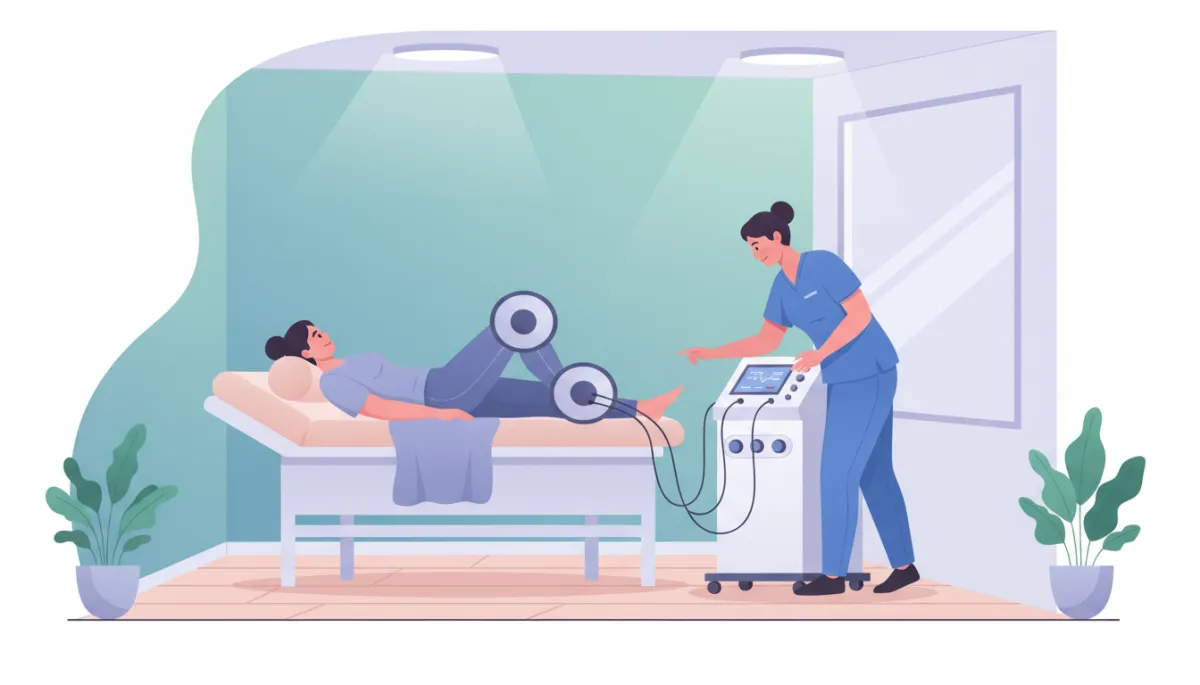
During treatment, you sit or lie comfortably while the therapy is applied to the targeted area.
You may feel:
gentle pulsing
light tapping
muscle relaxation
warmth
loosening
reduced tension
calming sensation
improved ease of movement afterward
PEMF treatment is not designed to be painful.
It does not burn the skin.
It does not require needles.
It does not involve medication.
Most sessions are short, and patients can usually return to normal daily activities afterward.
Some patients notice changes quickly.
Others need a series of treatments before meaningful improvement occurs.
That is normal.
Chronic pain and stiffness usually build over time, so they often require a structured treatment plan.
📌 Key Takeaway: PEMF therapy is usually comfortable, relaxing, and easy to tolerate.
6. Is PEMF Therapy Safe?
PEMF therapy is generally well tolerated for many patients.
It is non-invasive and does not require downtime.
However, it is not appropriate for everyone.
Before beginning care, patients should be evaluated and screened for health history, implanted devices, medical conditions, and treatment goals.
You should always tell the clinical team if you have:
a pacemaker
an implanted electrical device
certain metal implants
active cancer
pregnancy
seizure disorders
significant heart conditions
recent surgery
any implanted medical hardware
any serious medical condition
This does not automatically mean PEMF can never be used.
But it does mean your provider needs to review your situation carefully before treatment.
⚠️ Important: PEMF therapy should only be used after proper screening to determine whether it is appropriate for your condition.
7. Why Pain and Stiffness Keep Coming Back
Pain that keeps returning usually has a reason.
It may be related to:
inflammation
joint stiffness
muscle guarding
poor movement mechanics
arthritis
old injuries
overuse
nerve irritation
tendon stress
weakness
poor circulation
compensation patterns
repetitive strain
Many patients only treat pain when it flares up.
They rest.
They stretch.
They use ice or heat.
They take medication.
Sometimes that helps temporarily.
But if the underlying problem is still there, symptoms often return.
That is where a more complete evaluation can help.
The goal is to identify what is driving the pain, not just chase symptoms every time they flare.
📌 Key Takeaway: Recurring pain often means the underlying tissue, joint, nerve, or movement problem has not been fully addressed.
8. How PEMF Fits Into a Non-Surgical Treatment Plan
At Connecticut Disc and Laser Therapy Centers, PEMF therapy is not used as a generic relaxation treatment.
It is used as part of a targeted treatment plan when appropriate.
Treatment depends on:
the patient’s symptoms
the area involved
the suspected pain generator
movement limitations
functional goals
prior treatment history
overall health status
the tissues involved
For example, PEMF may be used differently for knee stiffness than for low back pain, shoulder tightness, or chronic muscle tension.
Placement, intensity, timing, and frequency should match the patient’s condition.
The goal is not to use the same treatment on everyone.
The goal is to build the plan around the patient.
📌 Key Takeaway: PEMF therapy works best when it is customized to the condition, not used as a one-size-fits-all treatment.
9. PEMF Therapy and Other Non-Surgical Treatments
PEMF may be used on its own, but it is often most useful as part of a broader non-surgical care plan.
At Connecticut Disc and Laser Therapy Centers, treatment may also include MLS Laser Therapy, emField Pro High Energy Inductive Therapy, chiropractic or movement-based care, and spinal decompression when appropriate.
MLS Laser Therapy
MLS Laser Therapy uses specific wavelengths of light designed to penetrate deeper tissues and support healing at the cellular level.
For pain, inflammation, and soft tissue irritation, MLS Laser Therapy may help:
reduce inflammation
decrease pain
improve circulation
calm irritated soft tissues
support tissue recovery
improve mobility
reduce stiffness
MLS Laser Therapy and PEMF may complement each other because they use different forms of energy to support tissue recovery.
emField Pro High Energy Inductive Therapy
emField Pro High Energy Inductive Therapy, also known as HEIT, uses high-intensity electromagnetic energy to stimulate deeper tissues.
For the right patient, HEIT may help support:
deep tissue stimulation
muscle activation
circulation
mobility
pain reduction
soft tissue recovery
reduction of muscle spasm
PEMF and HEIT are not the same treatment.
PEMF is generally used as a pulsed electromagnetic therapy that may support tissue recovery, circulation, and relaxation.
HEIT is a higher-intensity electromagnetic treatment designed to create deeper stimulation and muscle activation.
Both may have a role, depending on the patient’s condition.
Chiropractic and Movement-Based Care
Chiropractic care may help improve joint mobility, reduce stiffness, and address mechanical problems that may contribute to pain.
Depending on the condition, care may include attention to:
spinal mobility
joint motion
posture
muscle guarding
movement patterns
soft tissue tightness
activity modification
home care recommendations
For many patients, pain is not only about inflammation.
It may also involve how the body moves.
That is why a complete care plan may include both technology-based therapies and movement-based recommendations.
Spinal Decompression Therapy
For patients with disc-related back pain, sciatica, or nerve irritation, Spinal Decompression Therapy may also be considered.
This may be appropriate when symptoms involve:
herniated discs
bulging discs
degenerative discs
sciatica
disc-related back pain
pain traveling into the leg
nerve irritation
Not every patient needs spinal decompression.
But when disc pressure or nerve irritation is part of the problem, it may be an important non-surgical option.
10. Who May Be a Good Candidate for PEMF Therapy?
PEMF therapy may be appropriate for patients who want to explore non-surgical options for pain, stiffness, inflammation, and mobility problems.
Potential candidates may include people dealing with:
chronic joint pain
arthritis-related stiffness
muscle tightness
back pain
neck pain
knee pain
hip pain
shoulder pain
slow recovery
sports injuries
overuse injuries
soft tissue irritation
chronic soreness
mobility limitations
PEMF may also be useful for patients who feel like their progress has stalled with other forms of care.
However, the only way to know whether PEMF is appropriate is to be evaluated.
📌 Key Takeaway: PEMF therapy may be helpful for certain patients, but it should be recommended based on evaluation findings, not guesswork.
11. What to Expect From a Treatment Plan
A treatment plan should begin with a proper evaluation.
That may include:
review of symptoms
health history
orthopedic testing
movement assessment
functional testing
discussion of prior treatment
review of goals
screening for precautions
recommendations based on findings
If PEMF therapy is appropriate, it may be used as part of a structured treatment plan.
A plan may include:
PEMF therapy sessions
MLS Laser Therapy when appropriate
HEIT when appropriate
chiropractic or movement-based care when appropriate
spinal decompression when appropriate
home care recommendations
activity modifications
progress checks
Some patients notice improvement in stiffness or mobility early.
Others need multiple visits before meaningful change occurs.
The number of sessions depends on the condition, severity, how long symptoms have been present, and how the patient responds.
📌 Key Takeaway: PEMF therapy works best when it is part of a plan based on the cause of the symptoms, not just the location of the pain.
12. When Should You Get Checked?
You should consider scheduling an evaluation if your pain or stiffness:
lasts more than a few weeks
keeps returning
is getting worse
limits movement
affects walking, stairs, lifting, or exercise
affects sleep
causes muscle tightness
causes joint stiffness
does not improve with rest
has not improved with prior treatment
is starting to affect your quality of life
The earlier pain is evaluated, the more conservative options patients often have.
Waiting until symptoms become severe can make treatment more complicated.
⚠️ Seek urgent medical care if you experience severe weakness, loss of bowel or bladder control, numbness in the groin or saddle area, chest pain, shortness of breath, major swelling after injury, obvious deformity, fever with severe pain, or symptoms that feel like a medical emergency.
13. Why Patients in Shelton Choose Connecticut Disc and Laser Therapy Centers
Patients often come to our office after trying:
rest
ice
heat
stretching
medications
massage
physical therapy
injections
generic exercises
“wait and see”
Many are frustrated because they still cannot walk, work, exercise, sleep, lift, sit, stand, or move comfortably.
At Connecticut Disc and Laser Therapy Centers in Shelton, CT, we focus on advanced non-surgical care for chronic pain, joint pain, muscle tightness, soft tissue irritation, arthritis-related stiffness, nerve irritation, spine pain, and musculoskeletal conditions.
Our goal is to help patients reduce pain, improve mobility, and explore conservative treatment options whenever possible.
You can learn more about Dr. James J. Dalfino and his clinical background on our website.
Related Articles and Pages
For more information, these pages may be helpful:
MLS Laser Therapy
emField Pro High Energy Inductive Therapy
Chiropractic Care in Shelton, CT
Spinal Decompression Therapy
Back Pain Treatment in Shelton, CT
Neck Pain Treatment in Shelton, CT
Sciatica Treatment in Shelton, CT
Knee Pain Treatment in Shelton, CT
Contact Connecticut Disc and Laser Therapy Centers
Bottom Line
PEMF therapy may be an option for certain patients dealing with chronic pain, stiffness, inflammation, muscle tightness, joint pain, arthritis-related discomfort, soft tissue irritation, and slow recovery.
But the key is finding out what is actually causing the symptoms.
At Connecticut Disc and Laser Therapy Centers in Shelton, CT, we help patients explore advanced non-surgical options like PEMF therapy, MLS Laser Therapy, emField Pro High Energy Inductive Therapy, chiropractic care, and spinal decompression when appropriate.
The goal is to reduce pain, improve mobility, calm irritated tissues, and support better function whenever possible.
New Patient Special — $99
Comprehensive Consultation, Examination, Report of Findings, and First Treatment Included.
Connecticut Disc and Laser Therapy Centers
Dr. James J. Dalfino
2 Trap Falls Road | Suite 208 | Shelton, CT 06484
Office: 203-922-9277
Website: Connecticut Disc and Laser Therapy Centers


