
Ankle Pain Treatment · Shelton, Connecticut
Ankle pain making it
hard to stay active?
Walking, standing, stairs, exercise and even simple daily tasks can become frustrating when your ankle keeps hurting. We evaluate what may be contributing to the problem and whether non-surgical treatment may be appropriate.
When ankle pain starts affecting everyday life
Every step can start feeling like a calculation.
Because the ankle supports your body weight with every step, persistent pain can quickly affect walking, work, exercise and the activities you normally enjoy.
The cause may involve a sprain that never fully settled down, tendon irritation, arthritis, overuse, instability, inflammation, or compensation from another foot, knee, hip or back problem.
A proper evaluation helps determine what may be driving the pain and which treatment options make sense for your specific situation.

Our approach
Don’t just treat the sore spot.
Understand why it keeps hurting.
Ankle pain may involve more than one structure. Your history, examination, movement, stability and symptom pattern all help determine what should be addressed.
Common reasons patients come in
Ankle pain can show up in different ways.
Old ankle sprains
Pain, stiffness or instability that never completely resolved after an injury.
Tendon irritation
Discomfort involving tendons around the ankle from repetitive loading or overuse.
Arthritis & stiffness
Achiness, restricted movement or pain that increases with walking and standing.
Instability
A feeling that the ankle gives way, rolls easily or never feels fully dependable.
Overuse pain
Symptoms related to repetitive activity, exercise, work demands or changes in training.
Persistent swelling or irritation
Pain and sensitivity that continue long after the original problem began.
Non-surgical treatment options
Technology selected for your ankle.
Depending on your evaluation, your treatment plan may include MLS Laser Therapy, EmField Pro High Energy Inductive Therapy, Pulse PEMF, or a combination of these technologies.
MLS Laser Therapy
Non-invasive therapeutic light energy that may be used around irritated soft tissue, tendons and joint structures as part of a conservative ankle-pain treatment plan.
Explore MLS Laser Therapy ›EmField Pro
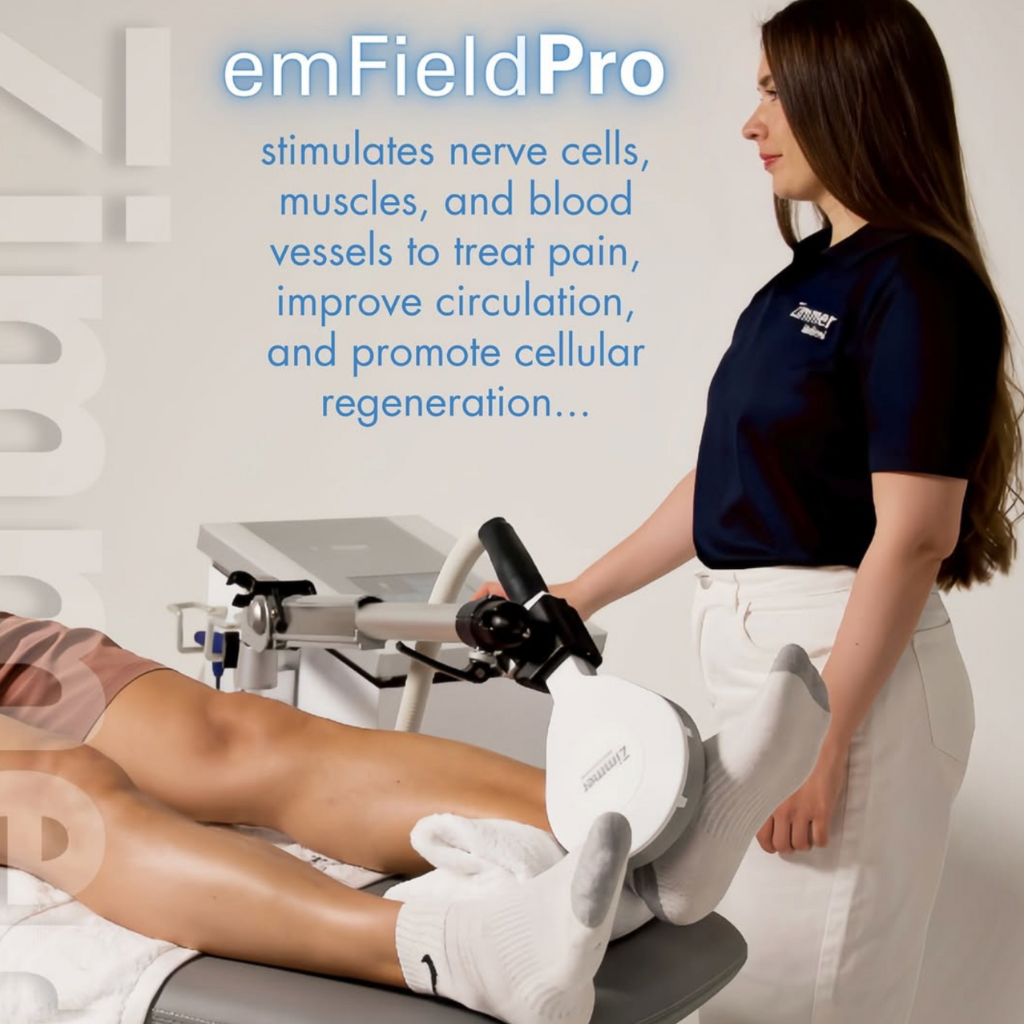
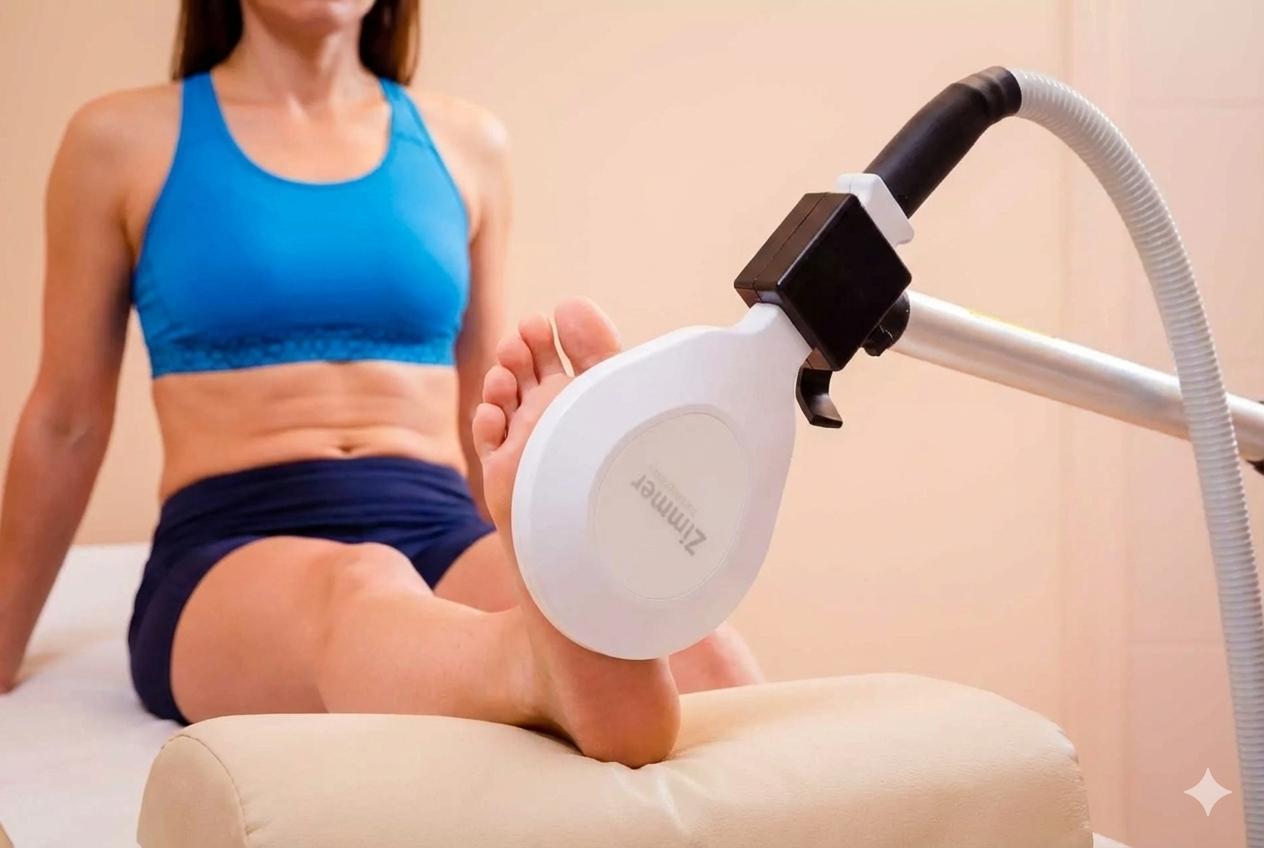
High Energy Inductive Therapy uses electromagnetic stimulation without mechanical impact and may be incorporated when muscle function, movement or nerve-related symptoms are part of the picture.
Explore EmField Pro ›Pulse PEMF
Pulsed electromagnetic field therapy may be used in selected cases to support comfort, circulation and recovery around the ankle and lower leg.
Explore Pulse PEMF ›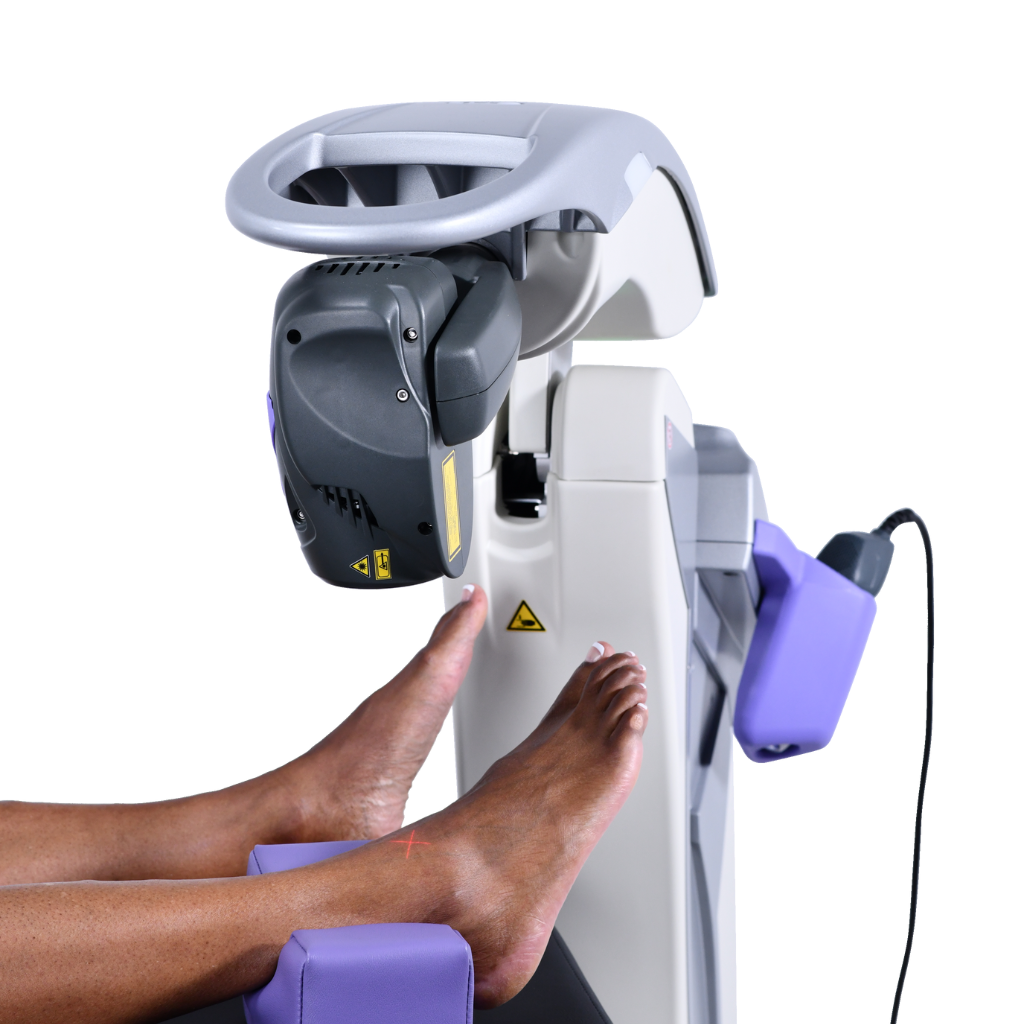
A non-surgical approach to stubborn ankle pain
Reduce irritation. Support better movement.
The goal is not to promise a cure or assume one technology is right for every ankle problem. Treatment is selected according to your symptoms, examination findings and the tissues that appear to be involved.
Some patients need more focus on pain and irritation. Others may need treatment that also considers muscle function, movement tolerance or lingering weakness after an old injury.
The ankle does not work in isolation
What happens above and below can matter too.
Foot mechanics, calf tightness, knee or hip movement, and the way you load the leg can all influence how the ankle feels during everyday activity.
That does not mean every ankle problem is caused somewhere else. It means the evaluation should consider the broader movement pattern instead of focusing only on the exact point that hurts.

Meet Dr. James J. Dalfino
More than 25 years evaluating musculoskeletal pain.
Dr. Dalfino has spent more than 25 years working with patients dealing with musculoskeletal pain, chronic symptoms and movement limitations.
His technology-focused approach starts with understanding what may be contributing to the problem before deciding whether the treatment options in the office are a good fit.
Meet Dr. Dalfino ›Frequently asked questions
Ankle pain, answered.
What are common causes of persistent ankle pain?
Common possibilities include old sprains, tendon irritation, arthritis, repetitive overuse, instability and other musculoskeletal problems. An evaluation helps determine which source appears most consistent with your symptoms.
Can an old ankle sprain still cause problems years later?
Yes. Some ankle injuries can leave behind stiffness, weakness, irritation or instability. Whether an old injury is contributing to your current symptoms depends on your examination and history.
Do you use MLS Laser Therapy for ankle pain?
MLS Laser Therapy may be used in selected ankle cases as part of a conservative treatment plan. It is not automatically the right option for every patient.
Do you use EmField Pro for ankle problems?
EmField Pro may be incorporated into selected treatment plans when High Energy Inductive Therapy appears appropriate for the muscles, nerves or movement pattern involved.
Is Pulse PEMF an option for ankle pain?
Pulse PEMF may be considered in selected musculoskeletal treatment plans. Whether it is appropriate depends on your symptoms, health history and examination findings.
How quickly should I expect improvement?
Response varies by patient and depends on the cause, severity, duration of symptoms, activity level, health history and treatment plan. No specific timeline or outcome can be guaranteed.
Take the first step
Find out what may be
driving your ankle pain.
Start with a one-on-one consultation and examination with Dr. Dalfino at Connecticut Disc & Laser Therapy Centers in Shelton.
New Patient Special
Consultation · Examination · Report of Findings · First Treatment
Schedule My New Patient Visit