
Plantar Fasciitis Treatment · Shelton, Connecticut
Stabbing heel pain
with your first steps?
Plantar fasciitis can make mornings, standing, walking and exercise frustrating. We evaluate your symptoms and determine whether non-surgical treatment may be appropriate.
Why plantar fasciitis can be so stubborn
Heel pain can change the way you move.
The plantar fascia is a strong band of connective tissue that runs along the bottom of the foot from the heel toward the toes. When it becomes irritated, pain is commonly felt near the heel.
A classic pattern is sharp or stabbing pain with the first few steps in the morning. Symptoms may ease once you get moving and then return after prolonged standing or when you get up after sitting.
Walking mechanics, repetitive loading, activity changes, footwear and other factors may contribute. An evaluation helps determine whether your symptoms appear consistent with plantar fasciitis and which treatment options may be reasonable to consider.

Our approach
Treat the painful area.
Then help you move better.
Plantar fasciitis is not just about where it hurts. Your activity, movement pattern, tissue irritation and response to loading can all matter when deciding how to approach treatment.
Common reasons patients come in
When heel pain starts running your day.
First-step morning pain
Sharp heel pain hits when you first get out of bed.
Pain after sitting
Symptoms return when you stand after being seated for a while.
Standing becomes uncomfortable
Long periods on your feet make the heel increasingly sore.
Walking or exercise is limited
You have started changing activity because the foot keeps bothering you.
The pain keeps returning
Rest helps temporarily, but the same pattern keeps coming back.
You want another option
You want to explore conservative treatment before deciding what comes next.
Non-surgical treatment options
Two technologies.
One focused plan.
Depending on your evaluation, your treatment plan may include MLS Laser Therapy, EmField Pro High Energy Inductive Therapy, or a combination of the two.
MLS Laser Therapy
Non-invasive therapeutic light energy used as part of selected musculoskeletal treatment plans. For plantar fasciitis, it may be applied around irritated soft tissue in the heel and plantar fascia region.
Explore MLS Laser Therapy ›EmField Pro
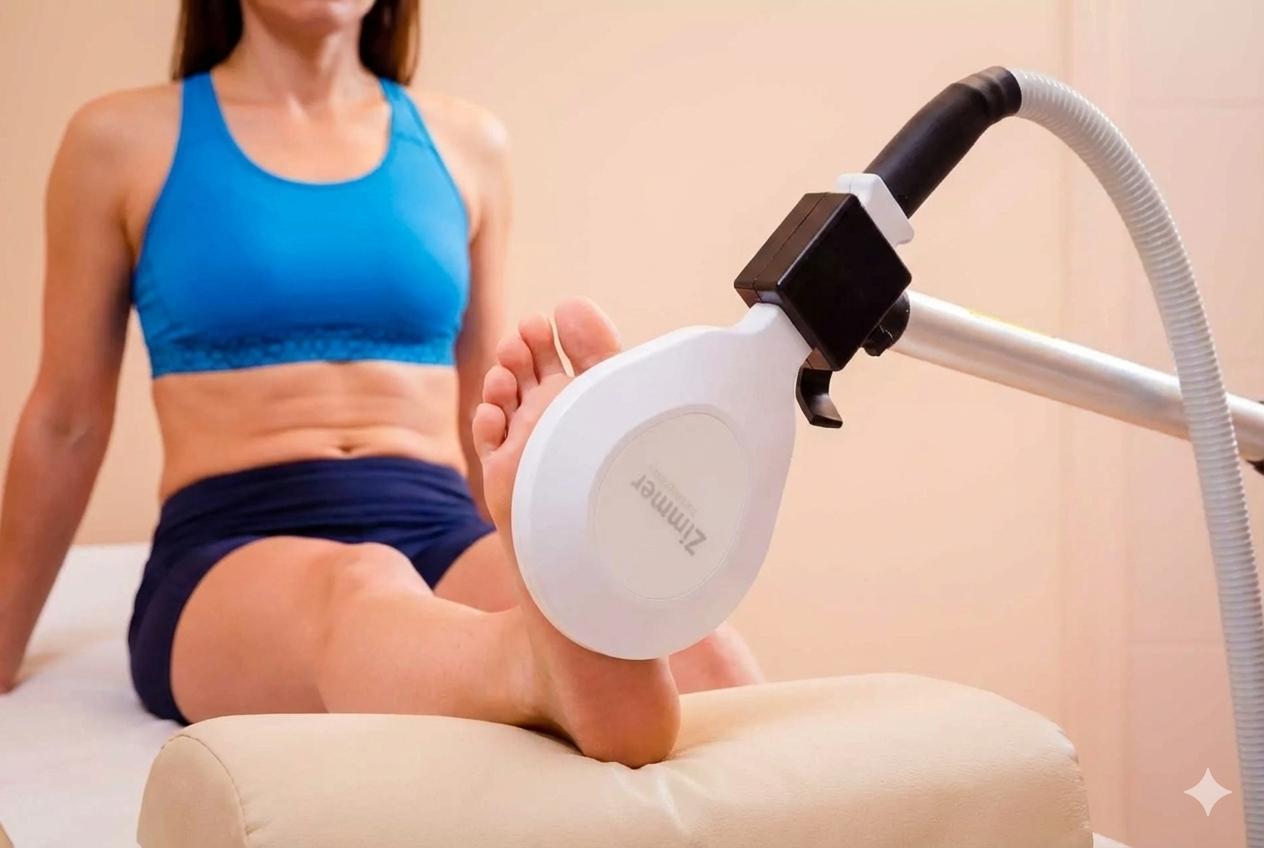
High Energy Inductive Therapy provides electromagnetic stimulation without mechanical impact. In selected cases, it may be used to support muscle function, local circulation and comfort around the foot and lower leg.
Explore EmField Pro ›
A different approach to heel pain
Less guesswork. More individualized care.
We do not assume that every case of heel pain is identical. Treatment begins with an evaluation of your symptoms, activity, movement limitations and the pattern of your pain.
If your findings are consistent with plantar fasciitis and you are an appropriate candidate for treatment in our office, Dr. Dalfino will recommend the technology or combination that best fits your case.
Response varies from patient to patient. The goal is to help reduce symptoms and support better function without making promises about a specific result or timeline.
Research resource
Want to see the research?
The previous version of this page included a randomized controlled trial comparing MLS Laser Therapy, ESWT and exercise therapy for plantar fasciitis outcomes. We have kept that resource available here.
Randomized Controlled Trial: MLS Laser, ESWT, and Exercise Therapy on Plantar Fasciitis Outcomes
This research link is provided for educational purposes and does not guarantee that any individual patient will respond in the same way.
View the research PDF ›
Meet Dr. James J. Dalfino
More than 25 years evaluating musculoskeletal pain.
Dr. Dalfino has spent more than 25 years working with patients experiencing chronic pain and musculoskeletal problems. His technology-focused approach begins with understanding what may be contributing to the problem before recommending treatment.
Meet Dr. Dalfino ›Frequently asked questions
Plantar fasciitis, answered.
What does plantar fasciitis usually feel like?
A common pattern is sharp or stabbing heel pain with the first few steps in the morning or when standing after a period of sitting. Symptoms can also increase with prolonged standing, walking or activity.
Is every case of heel pain plantar fasciitis?
No. Heel pain can have several possible causes. An evaluation helps determine whether your symptoms appear consistent with plantar fasciitis or whether another source should be considered.
Do you use MLS Laser Therapy for plantar fasciitis?
MLS Laser Therapy may be used in selected plantar fasciitis cases as part of a conservative treatment plan. It is not automatically the right option for every patient.
Do you use EmField Pro for foot or heel pain?
EmField Pro may be incorporated into selected treatment plans when High Energy Inductive Therapy appears appropriate for the muscles, soft tissue and functional pattern involved.
What if I have already tried stretches, inserts or physical therapy?
Prior treatment that did not provide the improvement you hoped for does not automatically determine whether another conservative approach will help. A new evaluation can help determine whether the technologies in our office are reasonable to consider.
How quickly should I expect improvement?
Response varies by patient and depends on the cause, severity, duration of symptoms, activity level, health history and treatment plan. No specific timeline or outcome can be guaranteed.
Take the first step
Find out what may be
driving your heel pain.
Start with a one-on-one consultation and examination with Dr. Dalfino at Connecticut Disc and Laser Therapy Centers in Shelton.
New Patient Special
Consultation · Examination · Report of Findings · First Treatment
Schedule My New Patient Visit