
Start with your story.
We begin by discussing where it hurts, what movements trigger it, and what care you have already tried.
Serving Oxford at our Shelton office
Plan a knee pain evaluation focused on stairs, walking or other activities you want to resume. At your first visit in Shelton, Dr. Dalfino will review your symptoms and discuss which treatment options may fit your findings.

Why patients come to us for knee pain
Stairs, longer walks and getting up from a chair can each bring on a different pattern. Tell us where it hurts and whether the knee swells or feels unsteady.
That is why we start with an evaluation rather than assuming every painful knee should be treated the same way.
Many patients come to us because they want to explore conservative, non-surgical treatment options before deciding whether injections or surgery are the right next step for them.
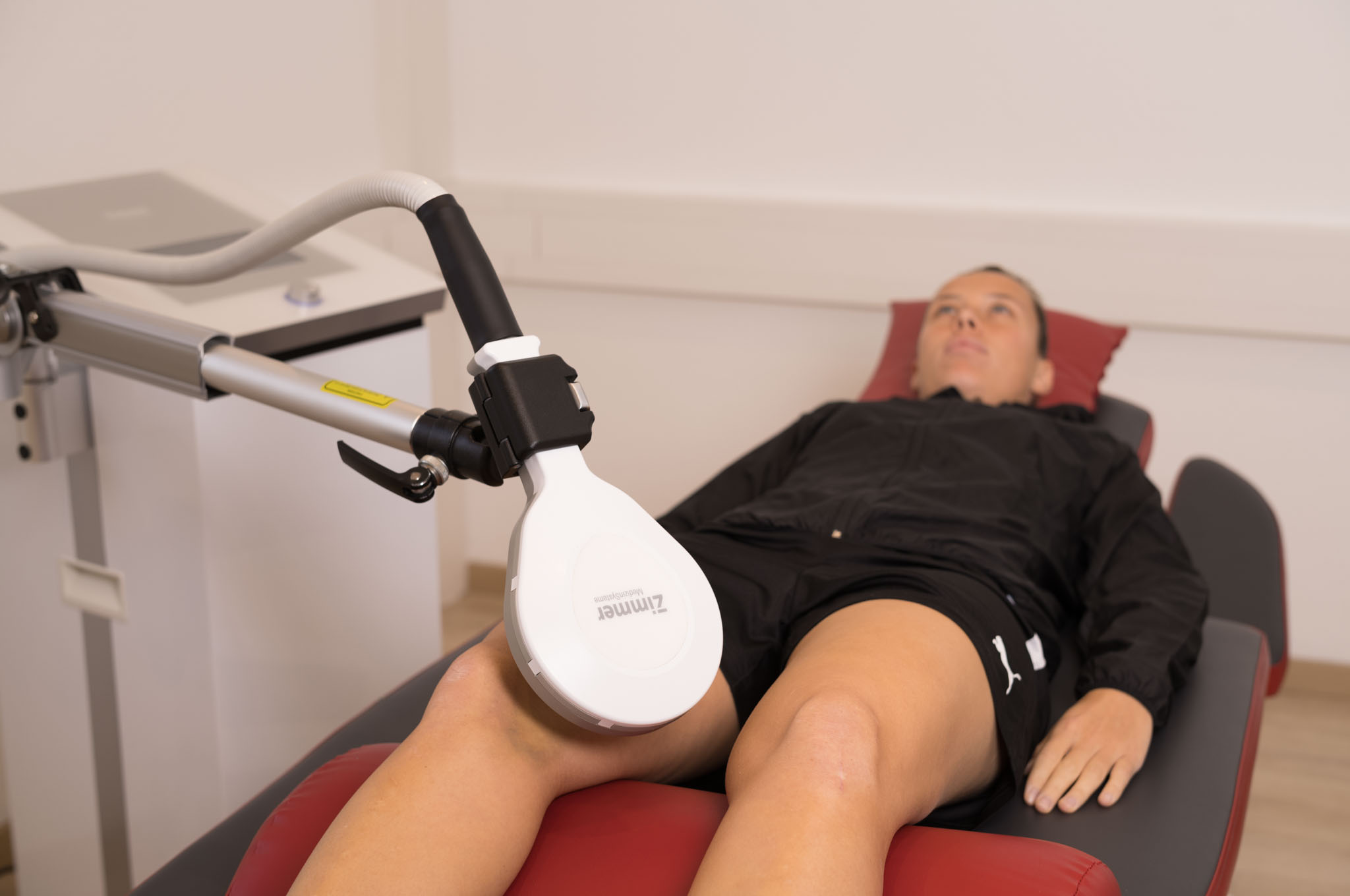
A more focused approach
Compare going downstairs, rising from a chair and walking on uneven ground. Note which movement is hardest, where the pain is and whether the knee swells or feels unreliable. Tell Dr. Dalfino what you have stopped doing or started doing differently. Bring any knee imaging report you have and ask how the exam will guide your options.
Common knee problems we evaluate
Achiness, stiffness, swelling, reduced motion, or pain with activity.
Degenerative joint changes that may make walking, stairs, or standing difficult.
Joint-line discomfort, catching, stiffness, or pain with bending and twisting.
A knee that feels tight, restricted, or difficult to get moving.
Symptoms that increase when going up or down steps.
Discomfort, weakness, or hesitation during sit-to-stand movement.
Symptoms that continue despite rest, medications, injections, or rehabilitation.
Pain that is limiting walking, exercise, work, golf, or everyday activity.
Non-surgical treatment options
After reviewing how the knee moves and what you want to get back to, Dr. Dalfino explains whether options such as MLS laser or EmField Pro fit your findings.
We begin by discussing where it hurts, what movements trigger it, and what care you have already tried.
Your examination helps determine whether treatment here is appropriate, what goals are reasonable, and whether another medical or orthopedic evaluation should come first.
Dr. Dalfino explains why a treatment is being recommended and how your progress will be reassessed.
When appropriate, your plan may include MLS laser, EmField Pro or PEMF. These are tools selected for your findings and goals.
Non-invasive therapeutic light energy that may be used in selected musculoskeletal treatment plans to help reduce discomfort and support normal tissue response.
Explore MLS Laser Therapy ›High Energy Inductive Therapy uses electromagnetic stimulation without mechanical impact. It may be incorporated when muscle function, movement, and local tissue irritation are part of the clinical picture.
Explore EmField Pro ›Pulsed electromagnetic field therapy may be used as part of selected conservative care plans to support comfort, circulation, and recovery.
Explore Pulse PEMF ›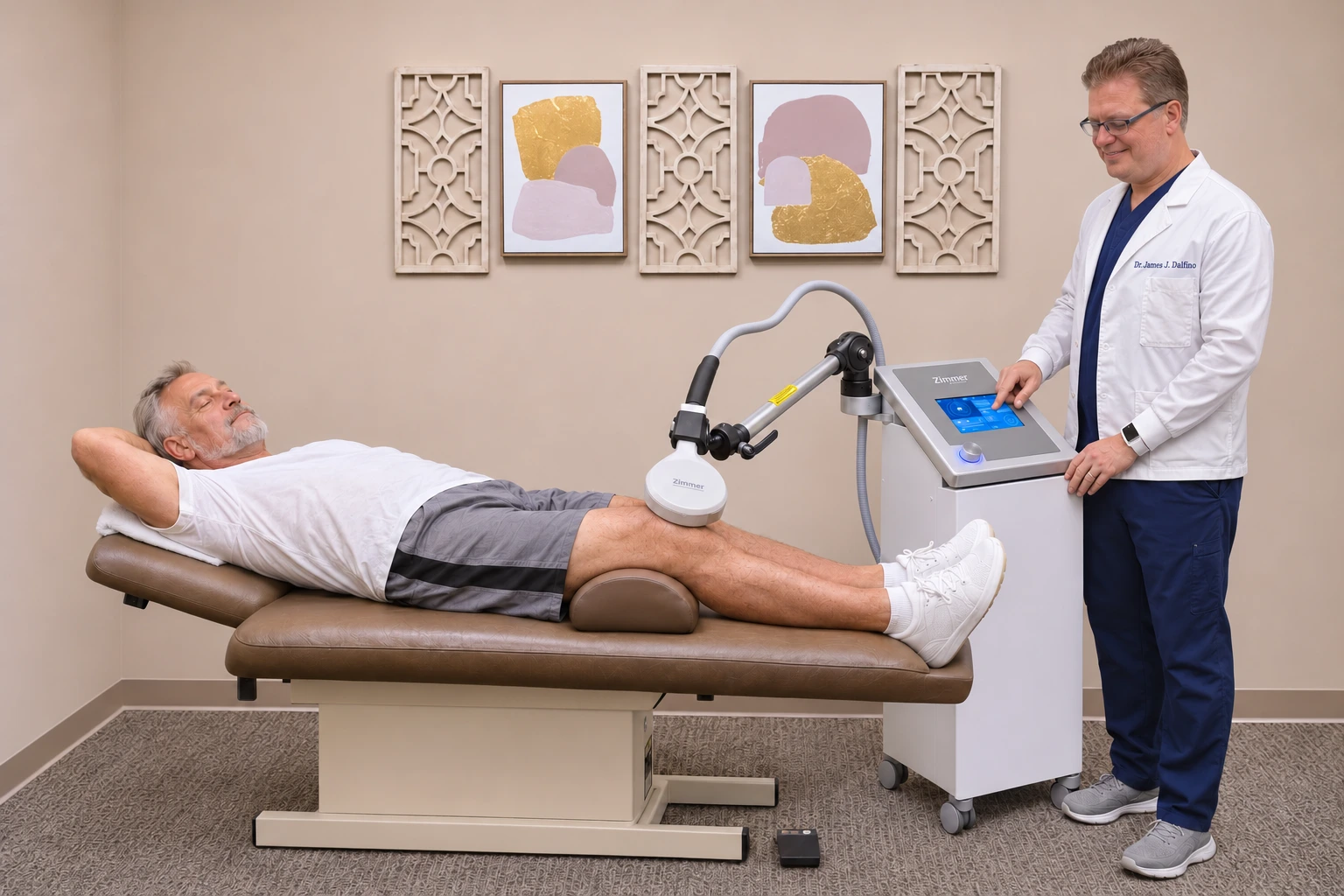
Why HEIT and laser may be considered
Degenerative changes may be part of the story, but pain can also be influenced by joint irritation, inflammation, muscle guarding, weakness, and reduced mobility.
That is why the goal of treatment is not to promise that arthritis can be “reversed.” The goal is to determine whether non-surgical care may help improve comfort, movement, and day-to-day function.
Some patients respond well. Others may need additional medical or orthopedic care. Your evaluation helps determine what is reasonable for your specific case.

Meet Dr. James J. Dalfino
Dr. Dalfino has spent more than 25 years working with patients with musculoskeletal pain and chronic conditions. His approach starts with understanding the problem, then determining whether the technologies in the office are a good fit.
Coming from Oxford? Bring your questions and any reports you already have to your Shelton appointment.
Meet Dr. Dalfino ›Questions before your Shelton visit
We evaluate patients with knee arthritis and other degenerative knee conditions. Whether care in our office is appropriate depends on your symptoms, examination findings, health history, and overall condition.
Some patients with advanced degenerative changes still explore conservative options for symptom management and function. Treatment does not regrow missing cartilage or guarantee that surgery can be avoided.
We evaluate knee pain that may involve meniscus irritation, but not every meniscus problem is appropriate for conservative care. Locking, significant instability, acute trauma, or other red flags may require orthopedic evaluation.
MLS Laser Therapy may be used in selected knee cases as part of a conservative treatment plan. It is not automatically the right option for every patient.
EmField Pro uses high-energy electromagnetic stimulation. Patients generally feel strong muscle contractions or pulsing during treatment. Intensity is adjusted to a strong but comfortable level.
Response varies from patient to patient. Your diagnosis, severity, duration of symptoms, activity level, health history, and treatment consistency can all affect how you respond. No specific result or timeline can be guaranteed.
Directions
Coming from Oxford? Our Shelton office is about a 25-minute drive from central Oxford. Use the directions below to check the drive from your address before you head out.
Get directions from Oxford to the Shelton office

Your next step
Tell Dr. Dalfino what hurts, how it affects your day and what you want to get back to. Your consultation and examination help identify what may be contributing to your symptoms and whether our care is appropriate for you.
Consultation, examination, report of findings and first treatment when appropriate.
Schedule My New Patient Visit