
Serving Oxford at our Shelton office
Shoulder Pain Treatment
Near Oxford, CT
Bring a clear picture of how reaching, lifting and sleep are affected by shoulder pain. At your first visit in Shelton, Dr. Dalfino will review your symptoms and discuss which treatment options may fit your findings.

Chronic shoulder pain relief
Look at pain and how the shoulder moves
Think about reaching overhead, putting on a coat or sleeping on that side. Which movements have you started to avoid?
That can help explain why temporary symptom relief does not always last.
At Connecticut Disc and Laser Therapy Centers, the first step is understanding what may be contributing to your pain and movement restriction. From there, Dr. Dalfino can determine whether a non-surgical treatment plan in our office is appropriate.

A different approach
Pain is one part.
Function is the bigger picture.
Shoulder care should consider how you move, what activities are limited, where the irritation may be coming from and which treatment is most appropriate for your specific case.
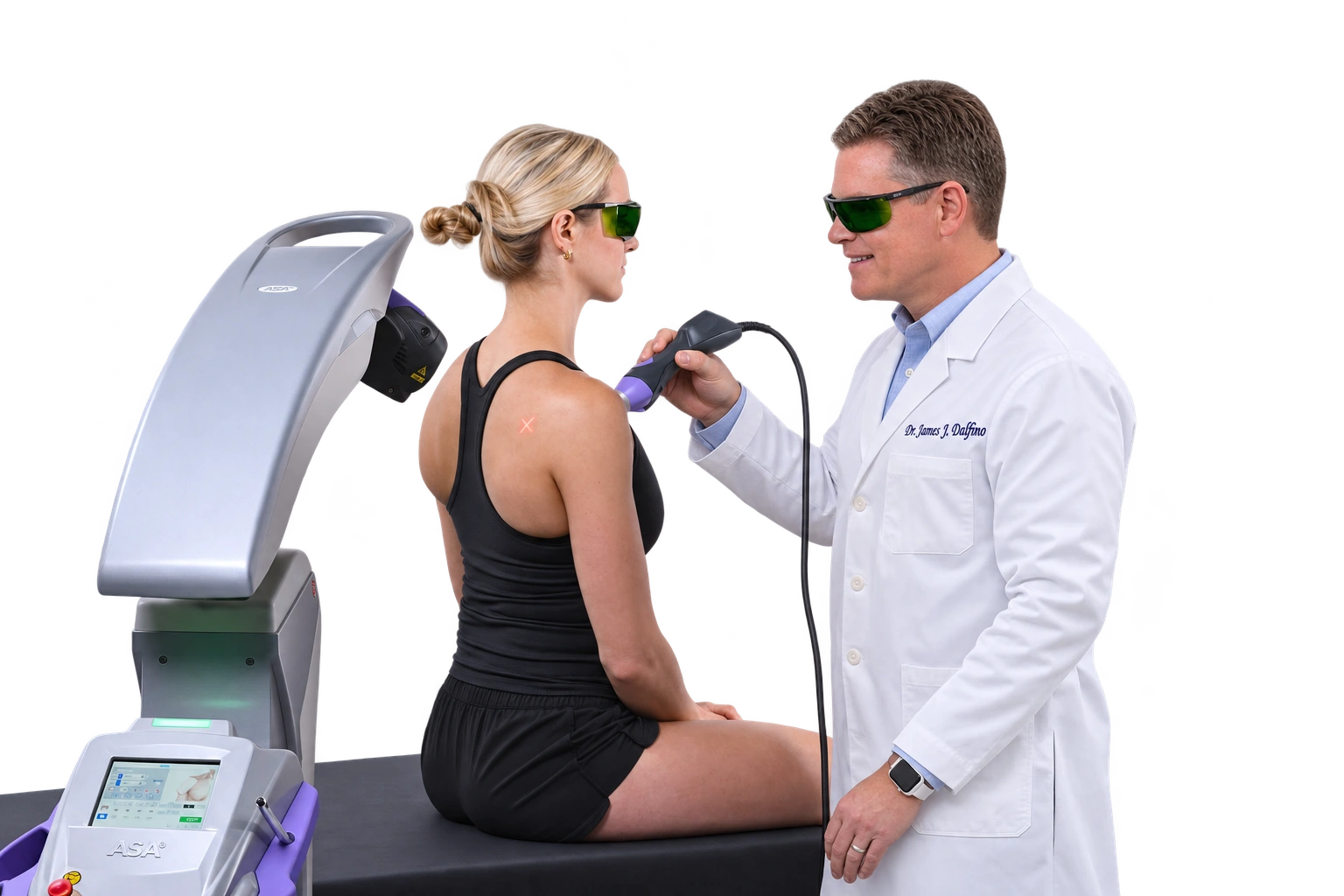
Our non-surgical approach
Compare three directions of reaching
Describe what happens when you reach to a high shelf, reach behind your back or reach across your chest. Mention which side hurts and whether the problem interrupts sleep. If there was a specific injury or you have noticed weakness, describe when it started. Bring any previous evaluation so you can ask how the exam will guide the next step.
Before recommending treatment, Dr. Dalfino evaluates your symptoms, shoulder movement, activity limitations and goals to determine whether the technologies in our office fit the problem.
When an evaluation may make sense
Shoulder pain can show up
in everyday moments.
You can’t sleep comfortably
Pain makes it difficult to lie on one side or stay asleep.
Reaching overhead hurts
Lifting your arm for shelves, cabinets or daily tasks triggers pain.
Reaching behind your back is limited
Dressing, fastening clothing or reaching behind you has become difficult.
The pain keeps returning
Symptoms settle down temporarily but never seem to stay gone.
You have a diagnosed shoulder condition
You were told you have bursitis, tendonitis, arthritis, frozen shoulder or a rotator cuff problem.
You want another option
You want to understand whether conservative care is still worth exploring.
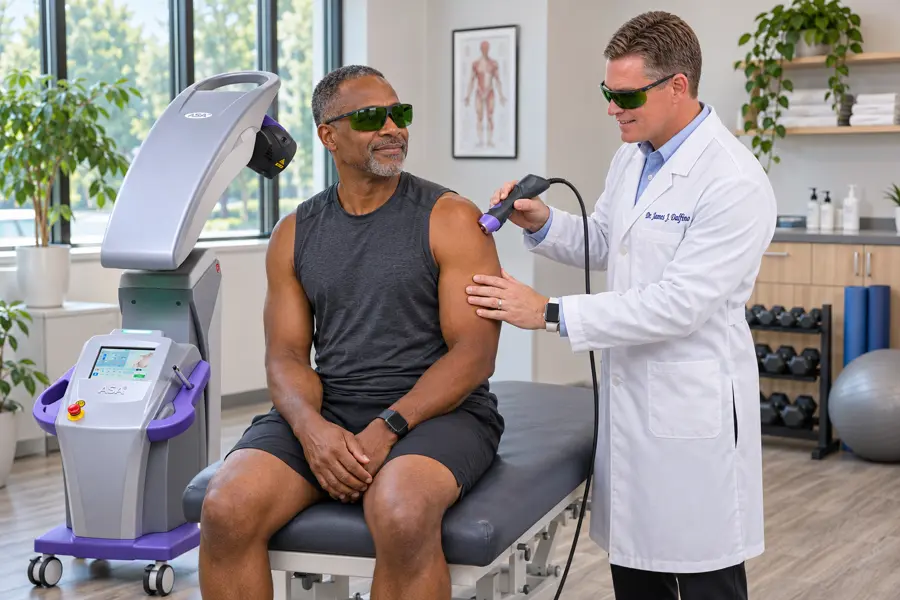
A different approach to shoulder pain
More than managing the symptom.
Every patient receives an evaluation before treatment begins. We look at your symptoms, movement limitations and possible contributing factors to determine whether non-surgical care is appropriate.
If you are a candidate, the goal is to build a plan around better comfort, movement and function so you can return to the activities shoulder pain has been limiting.

Meet Dr. James J. Dalfino
More than 25 years evaluating pain.
Dr. Dalfino has spent more than 25 years working with patients experiencing chronic pain and musculoskeletal problems. His technology-focused approach begins with understanding what may be contributing to the problem before recommending treatment.
Coming from Oxford? Bring your questions and any reports you already have to your Shelton appointment.
Meet Dr. Dalfino ›Questions before your Shelton visit
Shoulder pain, answered.
What types of shoulder problems do you evaluate?
We evaluate chronic or recurring shoulder pain, rotator cuff problems, tendon irritation, bursitis, frozen shoulder, arthritis, impingement-type symptoms and pain that limits lifting, reaching, dressing or sleeping.
Do you treat every shoulder problem the same way?
No. Shoulder pain can come from different structures and can even be referred from the neck or nerves. Treatment recommendations depend on your history, examination findings, movement and symptoms.
Can shoulder pain make sleeping difficult?
Yes. Many shoulder conditions become more noticeable when lying on the involved side or when the arm is positioned a certain way during sleep. An evaluation can help narrow down what may be contributing.
What if physical therapy or injections did not help?
Prior care that did not provide the improvement you hoped for does not automatically determine whether another conservative approach will help. A new evaluation can help determine whether the technologies in our office are reasonable to consider.
What if surgery has already been recommended?
If you want another opinion before making a decision, we can evaluate your case and explain whether any of our non-surgical options appear appropriate. We do not recommend delaying urgent or medically necessary care.
How quickly should I expect improvement?
Response varies from patient to patient and depends on the condition, severity, health history and treatment plan. No specific timeline or result can be guaranteed.
Directions
Coming from Oxford? Find our Shelton office.
Coming from Oxford? Our Shelton office is about a 25-minute drive from central Oxford. Use the directions below to check the drive from your address before you head out.
Get directions from Oxford to the Shelton office
