
Back Pain · Shelton, Connecticut
Standing Desk, Same Back Pain? Change the Routine, Not Just the Height
A standing desk can change your position without changing a long static workday. Learn how to review your setup and build more useful movement into work.
Explore the $99 New Patient Visit ↗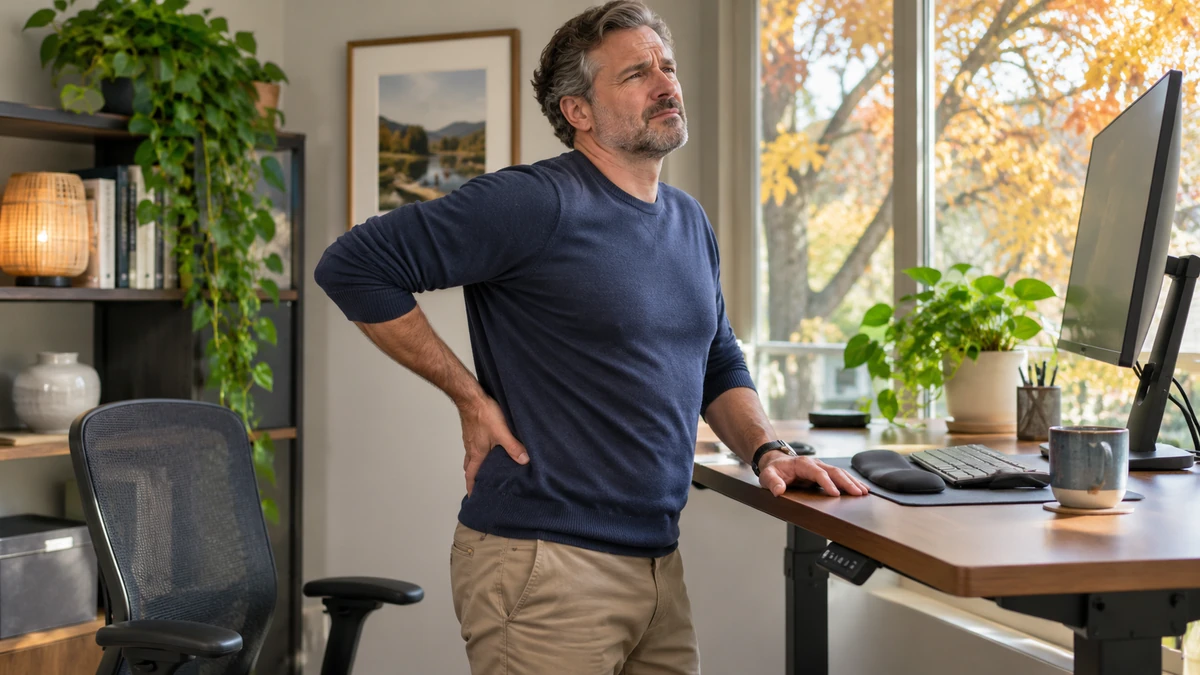
You raised the desk, but the ache still arrives by midafternoon. That does not mean you chose the wrong side in a sitting-versus-standing debate. Replacing a long uninterrupted sit with a long uninterrupted stand may leave the basic routine unchanged.
A more useful approach looks at comfortable positioning, task variety, and symptoms outside work. The desk is an adjustable tool, not a diagnosis or a complete treatment plan.
Separate the desk height from the whole setup
When the desk moves, the keyboard, mouse, and monitor still need to work together. Check whether you can type with relaxed shoulders and use the mouse without a sustained reach.
If the screen and keyboard are part of the same laptop, their connected positions may create a compromise. External accessories can allow independent adjustment. Judge changes while doing your normal tasks, not simply by whether the workstation looks orderly in a photograph.
Use the option to change position
OSHA recommends changing working position frequently rather than holding one posture for long periods. An adjustable desk can make that easier, but the adjustment still needs to happen.
Use ordinary work transitions as reminders: finish a call, get water, walk to a colleague, or switch tasks. There is no universal timetable that overrides comfort and individual needs. A movement break is different from standing completely still while continuing to stare at the same screen.
Track which demand is difficult
Note whether symptoms appear during sitting, standing, walking, reaching, or only after the day ends. Include leg pain, tingling, numbness, and changes in walking tolerance.
Keep the record simple enough to use. For example, describe a manageable morning and an afternoon when a particular task repeatedly becomes difficult. That information can help an assessment more than a general claim that desk work has ruined the back.
Adapt before buying more equipment
A secure foot support, a different task arrangement, or less reaching may be useful for some people. Consider whether the proposed change solves a specific problem rather than adding another product to an already complicated workstation.
Be cautious with unstable balance devices or surfaces that create a trip risk. If symptoms persist, an evaluation can help distinguish a workstation comfort issue from a condition needing a broader care plan. Equipment cannot replace that assessment.
Know when symptoms need medical attention
New bowel or bladder dysfunction, groin numbness, or rapidly worsening leg weakness requires emergency care. Significant injury, fever, or severe unexplained pain also calls for timely assessment.
For recurring work-related limitations without those signs, our Shelton office can discuss an individualized evaluation. Bring practical work goals and prior reports. Treatment should be reviewed against both symptoms and the ability to get through the day, not judged only by how long you can stand.
Common questions
Is standing always better than sitting for back pain?
No single position is best for every person or task. Comfortable variation and appropriate movement are more useful than a blanket rule.
Do I need an expensive desk to improve my routine?
Not necessarily. Some useful changes involve task arrangement and movement breaks. Identify the specific problem before buying equipment.
Your next step in Shelton
For symptoms that keep interfering with daily life, start with an individual evaluation. Our Back Pain page explains the clinic’s approach, and our pain management overview can help you explore the broader options.
Connecticut Disc and Laser Therapy Centers is located at 2 Trap Falls Road, Suite 208, Shelton, CT 06484. Call 203-922-9277 or review the $99 new patient visit to learn what the consultation includes. Treatment recommendations depend on your findings.
Related reading
Sources and further reading
These resources support the general education in this article. Individual advice depends on your medical history and examination.

Dr. James J. Dalfino
Clinic director of Connecticut Disc and Laser Therapy Centers in Shelton, Connecticut.
Meet Dr. Dalfino →