
Back Pain · Shelton, Connecticut
Do You Need an MRI for Back Pain? Questions That Guide the Decision
An MRI can answer useful questions, but it is not the first step for every sore back. Learn when imaging may change care and what to ask about your report.
Explore the $99 New Patient Visit ↗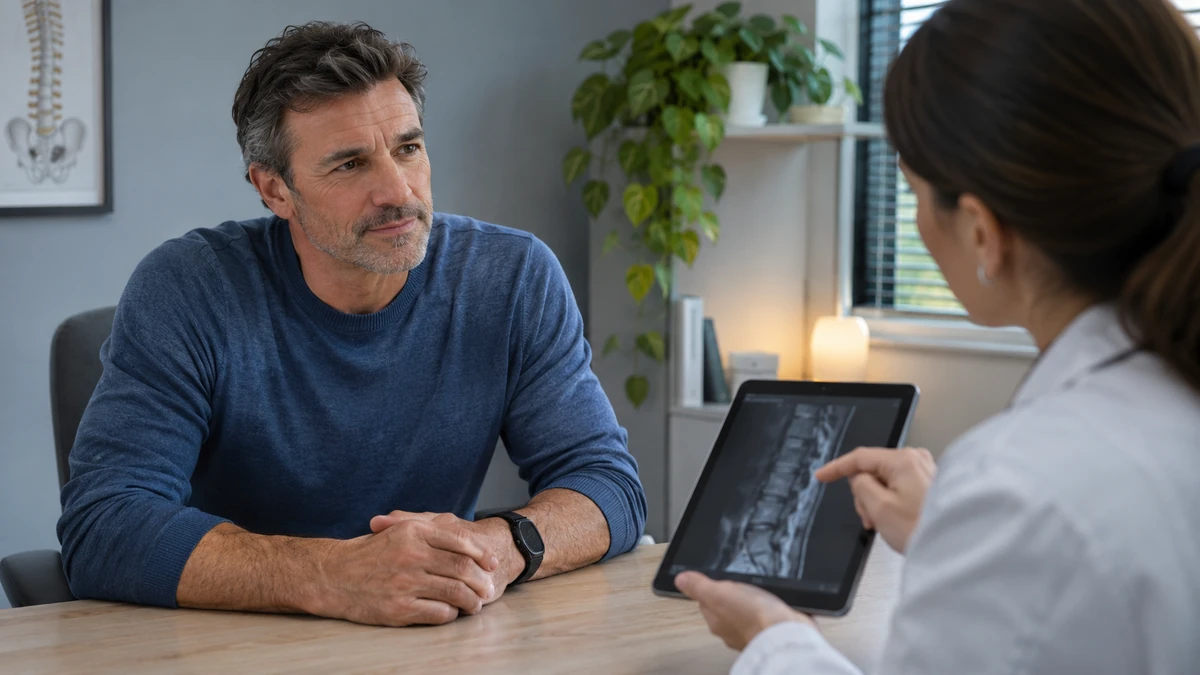
If your back hurts, wanting a picture of the problem is understandable. An MRI can show discs, nerves, and other tissues in detail. The important question is whether that information is needed now and whether it would change the next step.
A careful assessment can lead to imaging, but it can also explain why starting with a clinical plan is reasonable. Neither ordering a scan nor postponing one should replace a clear explanation of the decision.
Begin with the question the scan would answer
For many episodes of uncomplicated low back pain, immediate imaging is not routinely needed. A clinician first reviews symptoms, function, medical history, and examination findings for signs of a problem that needs a different approach.
Ask what the suspected diagnosis is, what the scan could clarify, and how a positive or negative result would affect treatment. Ordering a test simply because pain exists can leave you with a report but no better plan.
Understand why common findings need context
Terms such as degeneration, bulge, or arthritis can sound dramatic. Some imaging changes occur in people without symptoms, so a finding must be interpreted alongside the pain pattern and examination.
The report alone does not determine whether a particular disc is responsible, whether you need surgery, or whether a clinic technology is appropriate. Ask your clinician to distinguish findings that appear clinically relevant from observations that may be incidental.
Recognize situations that can change the timing
Serious or progressive neurological deficits and other warning signs can make prompt imaging or referral important. The relevant concerns can include suspected infection, fracture, cancer, or a spinal emergency.
New bladder or bowel control loss, groin-area numbness, or rapidly worsening leg weakness requires emergency assessment. Those symptoms should not wait for a routine request for an outpatient scan. Significant trauma and important medical history also need to be shared early.
Persistent symptoms deserve a reassessment
If symptoms are not improving with an appropriate plan, the next step is to reassess the diagnosis, examination, and management—not simply repeat the same visits indefinitely. Imaging may become useful when it would help guide a decision, such as a specialist procedure or surgical discussion.
There is no single waiting period that overrides every clinical circumstance. Ask when you should return, which changes should prompt earlier contact, and what progress is expected before the plan is reconsidered.
Bring the report into a broader care conversation
At a Shelton appointment, bring the written report and images if available, along with a timeline of symptoms and prior treatment response. Tell us whether the scan was obtained before or after the present episode began.
Dr. Dalfino can discuss whether the findings and examination support the non-surgical options offered by the clinic or whether another opinion is needed. A scan showing a disc change does not automatically establish eligibility for spinal decompression or eliminate other care options.
Common questions
Can an MRI show pain itself?
No. It shows anatomy and tissue characteristics that need to be interpreted with your symptoms and examination.
Does a disc bulge on MRI mean surgery is necessary?
Not automatically. The clinical picture, neurological findings, response to care, and individual circumstances guide that discussion.
Your next step in Shelton
For symptoms that keep interfering with daily life, start with an individual evaluation. Our Back Pain page explains the clinic’s approach, and our pain management overview can help you explore the broader options.
Connecticut Disc and Laser Therapy Centers is located at 2 Trap Falls Road, Suite 208, Shelton, CT 06484. Call 203-922-9277 or review the $99 new patient visit to learn what the consultation includes. Treatment recommendations depend on your findings.
Related reading
Sources and further reading
These resources support the general education in this article. Individual advice depends on your medical history and examination.

Dr. James J. Dalfino
Clinic director of Connecticut Disc and Laser Therapy Centers in Shelton, Connecticut.
Meet Dr. Dalfino →