
Back Pain · Shelton, Connecticut
Back Pain After Shoveling Snow: What to Do Next in Shelton
Snow cleanup can be a sudden jump in activity. Learn how to respond to back pain, pace the next cleanup, and identify symptoms that need urgent care.
Explore the $99 New Patient Visit ↗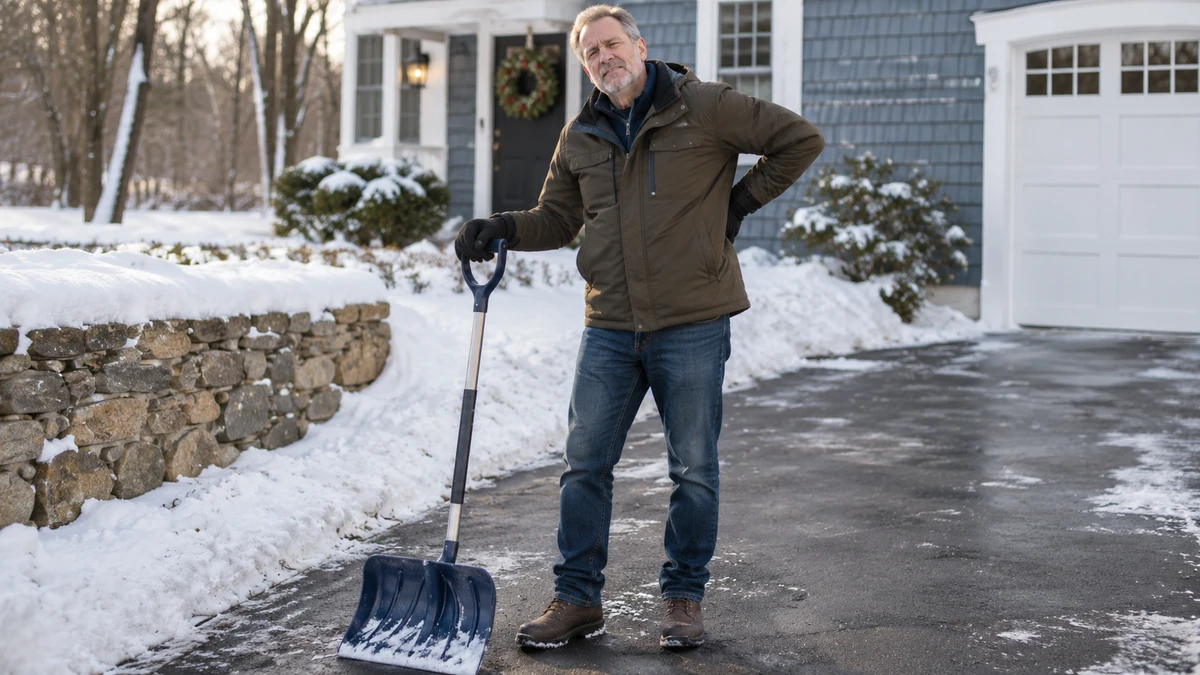
The driveway is clear, but standing up from the couch later is another story. Snow removal combines repeated bending, lifting, pushing, and turning—often when you are cold, rushed, and doing more physical work than usual.
Back pain afterward does not automatically mean you have injured a disc. The timing, location, and behavior of the symptoms help determine what to do next. A plan should address both the present discomfort and how you will handle the next storm.
Separate local soreness from changing nerve symptoms
An ache limited to the lower back is different from pain extending down a leg with tingling, numbness, or weakness. Neither pattern should be diagnosed solely from the activity that preceded it. A movement that triggers pain can be a clue without proving that a particular structure is damaged.
Record whether symptoms began during one lift or gradually after the job. Tell your clinician about falls, prior back episodes, and whether walking or changing position alters the discomfort.
Make the next day manageable
If there are no urgent warning signs, aim for comfortable ordinary movement instead of prolonged bed rest. A short easy walk may be more tolerable than another hour of cleanup. Adjust chores that repeatedly provoke symptoms, and do not test your recovery by lifting the heaviest remaining pile.
Ask your own clinician or pharmacist about safe medication choices if needed, especially if you have kidney disease, ulcers, heart disease, or take blood thinners. Someone else’s pain medicine is not a recovery plan.
Plan the next cleanup before the snow arrives
Decide which work can be shared, postponed, or handled by a snow-removal service. Clear smaller amounts before they become a large accumulated load when practical. A smaller shovel load and more frequent pauses may be easier to manage than racing to finish all at once.
Keep footing secure and avoid lifting while twisting on a planted foot. These are task-management ideas, not a guarantee against injury. Stop if the work causes escalating pain or you feel unwell.
Do not overlook emergencies
Back pain with new loss of bladder or bowel control, numbness around the groin, or rapidly worsening leg weakness requires emergency assessment. Severe pain after a fall, fever, or inability to walk also warrants prompt evaluation.
Chest pressure, unusual breathlessness, faintness, or pain spreading to the jaw or arm while shoveling should be treated as a possible medical emergency, even if back discomfort is also present. Stop the activity and seek emergency help.
Choose care around the findings
If symptoms keep returning, interfere with sleep, or prevent ordinary movement, an evaluation can clarify whether the issue appears muscular, joint-related, disc-related, or outside the scope of routine back care. Bring any prior reports and describe your work demands.
For selected patients, our Shelton office may discuss non-surgical care after the examination. Decompression is a candidacy decision, not an automatic response to any episode of pain after snow removal.
Common questions
Should I stay in bed until my back feels normal?
Prolonged bed rest is generally not the goal for uncomplicated back pain. Choose tolerable activity and obtain guidance if pain is severe or function is worsening.
Does pain after shoveling mean I need an MRI?
Not automatically. Examination findings, warning signs, and whether imaging would change treatment matter more than the activity alone.
Your next step in Shelton
For symptoms that keep interfering with daily life, start with an individual evaluation. Our Back Pain page explains the clinic’s approach, and our pain management overview can help you explore the broader options.
Connecticut Disc and Laser Therapy Centers is located at 2 Trap Falls Road, Suite 208, Shelton, CT 06484. Call 203-922-9277 or review the $99 new patient visit to learn what the consultation includes. Treatment recommendations depend on your findings.
Related reading
Sources and further reading
These resources support the general education in this article. Individual advice depends on your medical history and examination.

Dr. James J. Dalfino
Clinic director of Connecticut Disc and Laser Therapy Centers in Shelton, Connecticut.
Meet Dr. Dalfino →